



Articles

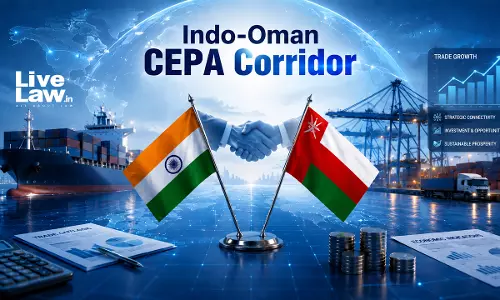
Processus Conveniens For Indo-Oman CEPA Corridor
On 8 June 2026, the Chief Justice of India, Justice Surya Kant, delivered a lecture in Courtroom No. 1 of the UK Supreme Court on the converging Indian and English approaches to commercial dispute resolution. it carried a doctrinal proposition that ought to interest anyone designing dispute architecture for India's new generation of trade corridors – doctrine of processus conveniens, by which the modern commercial actors focus not on the most convenient forum, but on the most appropriate...

Paradox Of Indian Will
“Easy to Make, Hard to Prove”- An Inversion that the Law must CorrectAn extraordinary legal peculiarity that has so far remained obscured from attention is the paradox of Indian Will. The law lays down a thin requirement for making a will provided under Section 63 of the Indian Succession Act, 1925, that the Will must be signed by testator and must be attested by two witnesses. That's all. Law doesn't mandate registration of Will. Therefore, a Will can be scribbled on a plain piece of paper...
When Filing Becomes a Battle: Need for A One-Shot Defect Scrutiny In Supreme Court Registry
No serious lawyer can dispute the importance of procedure in the Supreme Court of India. Procedure brings discipline to filings, protects the record, assists the Bench, and ensures that every petition placed before the Court is properly constituted. In a constitutional court dealing with thousands of matters, Registry scrutiny is not a clerical luxury; it is an institutional necessity. Yet, the lived experience of many advocates and litigants is that filing before the Supreme Court often becomes...

Problem With CFCFRMS: Reading MHA's New Account-Freeze SOP
A partner of a prominent Kochi based architecture firm called me last March seeking immediate help. The bank had placed a lien hold for over Rs 13.5 lakh on two of the firm's bank accounts without any prior notice. Enquiries from the bank only yielded vague replies that the amounts had been blocked as per directions received from Cyber Cell, Mumbai pursuant to a complaint regarding cyber fraud filed by a gentleman from Gujarat. The bank officials provided the contact details of the concerned...

Denying Maternity Leave To mother For Third Child, What Madras High Court Said ?
Shayee Nisha works in the district judiciary in Villupuram, Tamil Nadu. In January 2026, she applied for maternity leave for her third pregnancy. The Principal District Judge rejected her application. The reason was a Government Order issued on March 13, 2026, by the Tamil Nadu Human Resource Management Department, restricting maternity leave for a third pregnancy to 12 weeks. For her first and second children, she would have received full maternity leave. For her third, the state decided she...
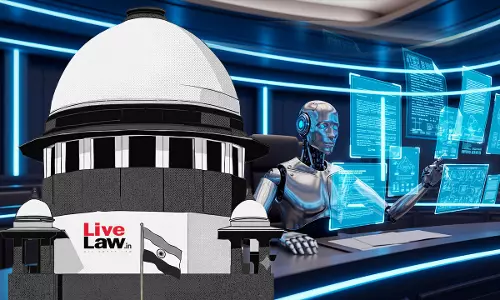
Regulating Artificial Intelligence In Indian Judiciary: From Institutional Experimentation To A National Framework
The Indian judiciary's experiments with digital technology began in earnest with the e-Courts Mission Mode Project,[2] which consists of three phases. Phase I (2007-2015) focused on foundational infrastructure, while Phase II (2015-2023) saw system-wide digital maturity via the Case and Information System 3.0, and the setting up of the National Judicial Data Grid. Phase III (2023–present) explicitly focuses on AI, Machine Learning, Optical Character Recognition, and Natural Language Processing...

Women's Property Rights In India: Law On Paper Vs. Reality
In India, after 79 years of independence, women have gained significant legal ground, and they are being treated equally to men. Several other rights have also been given with a view to protecting their independence, including modesty and dignity. They have entered the arena of competition with a framework of rights so extensive that some argue they now outweigh those of men. From equality...
Constitutional Pathology Of Delayed Adjudication: Reservation Without Preservation
Cessante ratione legis, cessat ipsa lex- when the reason for a law ceases, so does the law. Few maxims have travelled as quietly through the centuries, and fewer have aged with such inconvenient accuracy. It is among the boldest claims the common law has inherited, and for that reason among the most decorated and the least invoked. Treatises preserve it, judgments invoke it with deliberation, and its actual application has remained rare by design. To apply it is to assert that a law, though...

Cross Border Insolvency In India: What Rules Must Say
A view from the corridorIn May 2023, Go First – an Indian low-cost airline – filed for voluntary insolvency under section 10 of the Insolvency and Bankruptcy Code, 2016 (IBC). The Adjudicating Authority (NCLT) admitted the application and imposed a moratorium under section 14.[1]That much was routine. What followed was not.The aircraft lessors – companies such as Pembroke Aircraft Leasing, SMBC Aviation Capital and Accipiter Investments – had already terminated their lease agreements. They...
Banking On Takeovers: RBI's New Acquisition Finance Regime In India
The Reserve Bank of India has issued the Amendment Directions under the Reserve Bank of India (Commercial Banks Credit Facilities) Directions, 2026 (Revised) dated 30 March 2026. The Directions will take effect on 1 July 2026. They have introduced a structured framework for commercial bank financing of corporate acquisitions, a type of commercial lending that had only been given a few carve-outs in the regulatory framework. The Directions also restated the regime relating to loans against...
Coded Collusion: Algorithmic Pricing In Indian Aviation And Structural Failure Of Competition Law
The Pricing Paradox: When Algorithms Converge Without ConspiringAviation market in India presents one of the sharpest paradoxes in the modern competition law under which the prices of competing airlines tend to move in the perfect symmetry, yet no agreement, communication, and conspiracy can be demonstrated. In India four major domestic airlines control more than 90% of the seats like IndiGo, Air India, Spice Jet, and Akasa Air. The pricing engines of these airlines empowered by reinforcement...