



Law School Articles

Architecture Of Restraint: EU Labour Enforcement And Worker Mobility In India
Historically, the Indian labour market has been regulated by labour and employment laws, which primarily focus on aspects such as wages, working conditions, and collective bargaining. Article 19(1)(g) of the Constitution guarantees every citizen the freedom to practice any profession or carry on any occupation, trade, or business. Although the State can impose reasonable restrictions under Article 19(6), the broader constitutional vision clearly supports occupational mobility and guards against...
When Can High Court Invoke Article 227 Against Arbitral Tribunal?
The Recurring QuestionOne question has consistently tested the boundaries of judicial intervention in arbitration, namely, whether a party dissatisfied with an order of an Arbitral Tribunal, typically one rejecting a jurisdictional objection under Section 16 of the Arbitration and Conciliation Act, 1996 (herein after referred to as “the Act”), run to the High Court under Article 227 of the Constitution instead of waiting for the final award? The Supreme Court has answered this question...

From Risk Management To Business Strategy: Evolution Of Corporate Legal In India
For a long time, corporate legal departments were viewed as cost centres that were valued more for preventing issues than for producing results. That view is changing quickly. As businesses invest more in internal competence than in outside counsel, general counsel now sit alongside CEOs and boards as strategic decision-makers, evaluated on business performance measures rather than lawsuit results.What is causing this? Rapid technological innovation, the professionalization of legal operations...

Infodemic Crisis: Impact Of Online Vaccine Messaging On Public Trust
Vaccines are one of the biggest public health developments of all time, preventing millions of deaths and eliminating serious diseases every year. Even with all this success, vaccine hesitancy, defined as the refusal or delay in getting vaccines despite their availability, was named as one of the biggest health threats by the World Health Organisation (WHO). Vaccination scepticism dates back to the smallpox vaccination, but the digital era has uniquely fuelled its dissemination. In this network,...
Property Without Protection: Structural Marginalization Of Crypto Asset Stakeholders
WazirX, one of India's largest and well-known crypto marketplaces underwent insolvency proceedings in 2024 following a $235 million hack carried out by North Korean hackers. This insolvency proceeding revealed a fundamental gap in India's insolvency framework when dealing with the crypto assets. Even though the crypto assets are now given recognition in the IBC as 'property', the procedure for dealing with those assets is still uncertain. Under the Insolvency and Bankruptcy Code, the crypto...
Testing Places Of Worship Act
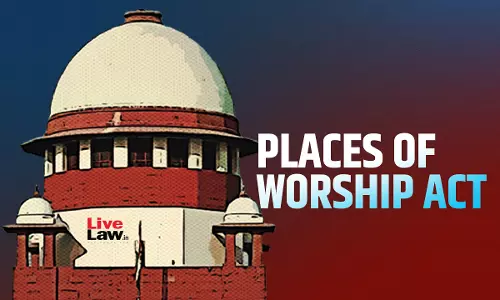
THE BACKGROUND OF THE ACTThe Places of Worship Act, 1991, was enacted in the backdrop of the Ram Mandir movement during the 1990s. Section 3 of the Act prohibits and criminalizes the conversion of a place of worship, as a whole or in part, from one religion to another or to a different sect of the same religion, while Section 4 of the Act bars courts from examining the religious character of a disputed place of worship, with a cut-off date of August 15, 1947. Section 5 exempted the Ram...

When Seeing Becomes Recording: Invisible Bystander And Limits Of Indian Privacy Law
In July 2026, the Meta-AI powered Ray-Ban smart glasses became the center of conversation after two unconnected incidents captured public attention. At a trans rights march in Delhi, a content creator filmed a brief conversation with a protestor, without her knowledge. Days later, in a separate incident, photographs of a Delhi police officer wearing the same glasses while deployed at a public gathering started making rounds on social media. Both incidents exposed the same underlying anxiety -...

LiveLaw Editorial Guidelines For Article Submissions
LiveLaw publishes original, timely legal article that offers clear value to practitioners, academics, students and litigants. Owing to the volume of submissions, articles are assessed against the following editorial standards.I. Submission Categoriesa) General ArticlesLegal developments, legislation, policy and other areas of law.b) Law Firm ArticlesContributions by law firm partners, associates, general counsel and other legal professionals.c) Law School ArticlesContributions by law...
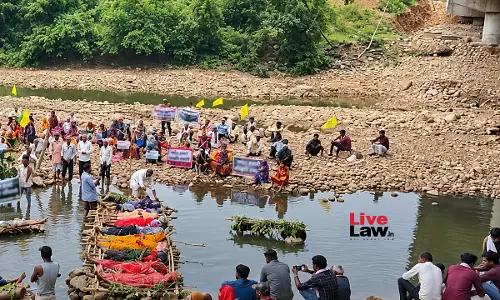
Ken-Betwa River Linking Project: Balancing Development And Environmental Justice
The Ken–Betwa River Link Project is India's first major river interlinking project. The project moves water from one river to the other through a dam and canal system, aiming to fix chronic water shortages across 10 districts in Madhya Pradesh and 4 districts in Uttar Pradesh. A link canal, which is over 220 km long, will carry water from the Ken basin to the Betwa basin. The approximate cost of the project is around ₹44,605 crore as stated in the Union Budget of 2022-23. As per the statement of...

Two Faces Of Same Algorithm: Algorithmic Disparate Impact On India's Adivasi Communities
India's forest governance is increasingly caught in a profound technological contradiction. While tribal welfare agencies deploy digital mapping tools to secure land tenure for marginalized forest dwellers, state forest departments deploy automated AI surveillance systems that criminalize the traditional, legally protected forest-dependent livelihoods of those exact same populations. This structural friction—where identical technological capabilities deployed by different branches of the same...

Branding Goondas: Misue Of Preventive Detention Laws By State Governments
The recently passed West Bengal Public Safety and Control of Anti-Social Activities Bill, 2026 (commonly called as “Goondas Act”) has put the issue of coercive state power and attack on civil liberties in the national news again but by no means this is an isolated case in any one particular part of the country. There is a growing concern that these acts are being used to book people for petty crimes and suppressing democratic dissent. This is highlighted by incidents like repeated preventive...
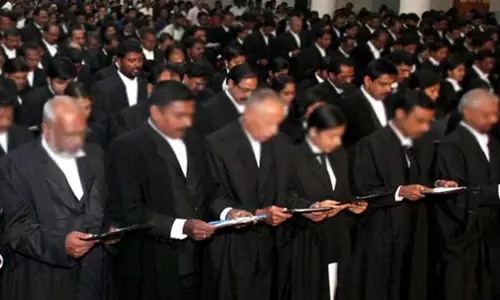
From ₹750 To ₹22,500: Will Proposed Enrollment Fee Strengthen Legal Profession Or Create Barrier For Young Lawyers?
The Bar Council of India (BCI) has proposed increase in the enrollment fee for advocates from ₹750 to ₹22,500 through the Draft Advocates (Amendment) Bill, 2026. It has sparked concern among law students and newly graduated lawyers across the country, although the proposal has not become law yet but it raises an important question: Whether this increase will become a financial burden for fresh graduates who are just entering the profession? The enrollment fee remained unchanged since 1993, and...