



Articles

When Finality Fails: Res Judicata After Setting Aside Of Awards
Though the incorporation of the principle of res judicata in arbitration is well settled, its application becomes uncertain once an arbitral award is set aside under Section 34 of the Arbitration and Conciliation Act, 1996 (hereinafter referred as 'the Arbitration Act'). The Supreme Court, in its various judgments, has laid down that once an issue is decided, it cannot be re-agitated across arbitral stages.2 However, the result of setting aside of an award remains unexplored as to whether it...
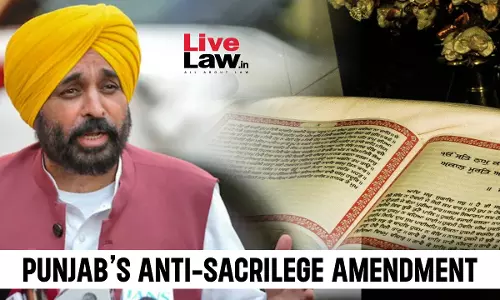
Sacrilege And The State: Three Constitutional Questions Punjab's Anti-Sacrilege Law Has Not Answered
Background “The scripture is the abode of the Supreme Being.” - Guru Arjan Dev Ji, Guru Granth Sahib Ji, Ang 1226 On 20th April 2026, the Punjab Legislative Assembly unanimously passed the JaagatJot Sri Guru Granth Sahib Satkar (Amendment) Act, 2026, amending the foundational 2008 statute governing reverence, custody, and protection of the Guru Granth Sahib Ji. To Sikhs, the Guru Granth Sahib Ji is not merely a scripture it is the living, eternal eleventh Guru. Each physical...

Corporations In The Dock: Unraveling Criminal Liability
TODAY'S Society is increasingly faced with types of economic offences unknown to the nineteenth-century society in which criminal justice systems were shaped. In today's societies prosecutors have to deal with economic and environmental criminality previously not heard of. An important aspect of these trend corporations in white-collar criminality and the consequences punishment of this particular type of wrongdoing. As the bulk omic activity nowadays takes place through corporations, omic...

Rethinking Abortion Law: A Rights-Based Approach For Rape Survivors
In a significant intervention, the Supreme Court of India has urged the Union Government to reconsider the gestational limits under India's abortion law, particularly in cases involving rape survivors. The direction reflects judicial discomfort with a legal framework inhumane to rape survivors. The direction reflects judicial discomfort with a legal framework that is inhumane to rape survivors. However, the recent intervention is not merely about legislative amendment; it represents a step...
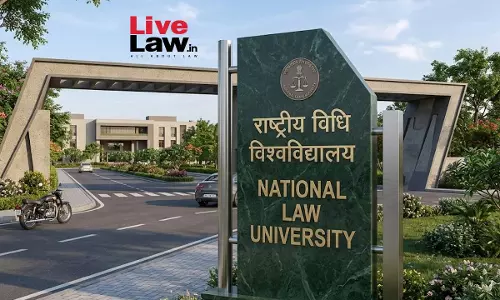
NLU Uttarakhand: A Long wait Continues
The National Law University of Uttarakhand Act, 2011 was passed with a vision to establish an NLU for the advancement of legal education in Uttarakhand. However, the inability of the Uttarakhand government to operationalize the National Law University even after more than a decade reflects a troubling lack of accountability and administrative effectiveness. This inordinate delay has not only denied aspiring law students access to quality legal education within the State but has also eroded...

Third Pregnancy Penalty: Madras High Court Strikes Down Tamil Nadu's Discriminatory Maternity Leave Order
On April 28, 2026, a Division Bench of the Madras High Court, comprising Justices R. Suresh Kumar and Justice N. Senthilkumar, delivered a significant order in the case of Shayee Nisha v. Principal District Judge, Villupuram & Ors (W.P.No.16245 of 2026),. The Court set aside a Government Order (G.O. Ms. No. 18) dated March 13, 2026, issued by the Tamil Nadu Human Resource Management Department (TNHRMD), which restricted maternity leave for a third pregnancy to only 12 weeks.The petitioner,...

From Intelligence To Empathy: Reimagining Role Of Emotional Intelligence (EQ) In Legal Profession
The legal profession has long been anchored in the primacy of intellect, logic, precedent, statutory interpretation and reasoning. From classrooms to courtrooms the emphasis has traditionally been on the relevance of Intelligence Quotient (IQ) i.e. the ability to analyse, argue and adjudicate. However, the lived realities within the legal profession increasingly reveal a silent yet an urgent need for Emotional Intelligence (EQ). There is a need to bring in a paradigm shift from a purely...
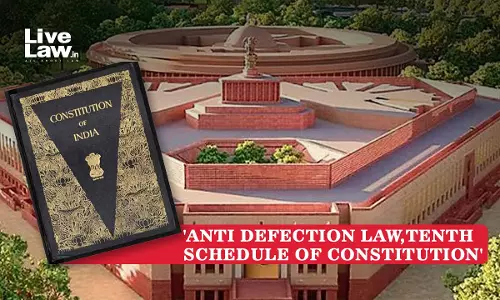
When Does An Independent 'Join' A Party? Tenth Schedule's Unanswered Question
Rajesh Ranjan, better known as Pappu Yadav, is a six-time Member of Parliament from Purnea, Bihar. In March 2024, he merged his Jan Adhikar Party (Loktantrik) with the Indian National Congress. He did so reportedly on a single condition: Congress would field him from Purnea. The condition was not honoured. Under the INDIA alliance's seat-sharing arrangement, Purnea was allotted to the Rashtriya Janata Dal. The RJD, whose founder Lalu Prasad had expelled Pappu Yadav twice from the party, had no...

Judicial Misbehaviour
A single judge of the Andhra Pradesh High Court has become the judicial newsmaker this week after losing his temper and ordering the imprisonment of a young lawyer with only two years of practice. The Supreme Court Bar Association (SCBA) and the Bar Council of India (BCI) invited the attention of the Chief Justice of India through representations and resolutions. The Supreme Court suo motu seized the issue, and after registering two writ petitions, gracefully closed the matter on the judicial...

Likes, Shares, And Liability: The Evolution Of Finfluencer Regulation In India.
The modern Indian investment adviser no longer operates from a desk on Dalal Street. More often, significant financial advice comes via smartphones, short videos, and the unclear logic of algorithms. In this landscape, “finfluencers,” who are social media figures discussing money, markets, and investing, have become influential but loosely regulated links between retail investors and the securities market.I. The Rise of Finfluencers in India(i) Growth of Retail ParticipationThe growth of...
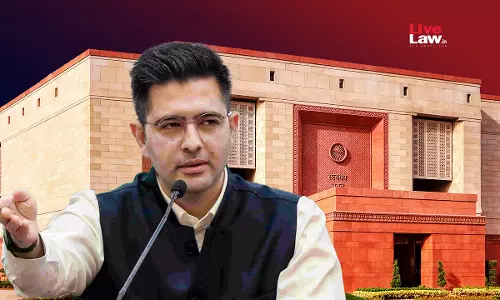
Gavel And Court: Analyzing Judicial Review In Speaker Rulings
Raghav Chadha and two-thirds of AAP's Rajya Sabha members (legislature party) have merged with the BJP, citing the Tenth Schedule's merger exception (4th paragraph) and a Bombay High Court precedent. In 2019, 10 of 15 Goa Congress MLAs merged with the BJP. The Speaker rejected a subsequent disqualification petition, a decision upheld by the Bombay High Court in 2022. The Bombay High Court affirmed that a two-thirds majority of the legislature party is sufficient for a valid merger under the...

Delhi Rent Control Act, A Case for Reference To A Larger Bench
The Delhi Rent Control Act, 1958 (DRC Act) was enacted as a situational legislation in the aftermath of the Partition of India which led to a temporary housing shortage. Being a socio-economic legislation, it required periodic review to remain in consonance with the changing times. However, the Executive's inaction in not issuing a commencement notification to enforce the Delhi Rent Act, 1995, coupled with judicial deference, has led to DRC Act assuming permanence.Disputes under the DRC Act...