




Fast-Track Courts: India's Repeated Promise Of Speedy Justice
Vaibhav Sahu & Sneha Arora
23 Aug 2026 8:00 PM IST
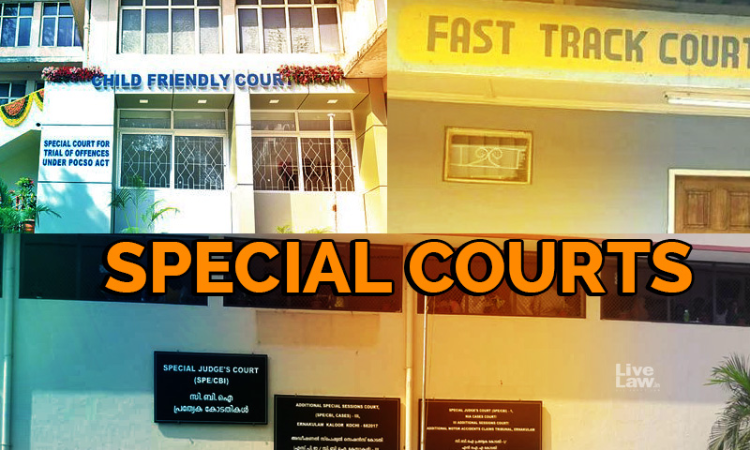
The Union Government's recent assurance that cases arising out of paper leak scandals would be tried through fast-track courts has understandably been welcomed by students and parents alike. Competitive examinations determine the future of millions of young Indians. When examination papers are leaked, the damage extends beyond a single recruitment process; it undermines public confidence in the integrity of institutions themselves. Those responsible deserve to be prosecuted, and they deserve to be prosecuted without undue delay. There is little disagreement on that objective.
The real question, however, is whether announcing another fast-track court is enough to achieve it. India's legal history suggests that the answer is not as straightforward as governments often make it appear. Whenever a public issue attracts widespread attention, the institutional response is strikingly familiar. A special court is announced. A specialised tribunal is constituted. A dedicated forum is created. The expectation is that merely transferring a category of cases to a new institution will produce faster justice.


The experience of the last three decades tells a different story. India does not suffer from a shortage of specialised forums. Consumer Commissions, Debt Recovery Tribunals, Commercial Courts, Family Courts and several categories of Special Courts were all created because ordinary courts were considered too slow for particular classes of disputes. Each of these institutions was established with a common legislative objective- to secure expeditious adjudication. Yet many of them today struggle with mounting pendency, judicial vacancies and administrative deficiencies that increasingly resemble those affecting ordinary courts. The difficulty, therefore, is not legislative design.
Parliament has repeatedly enacted laws recognising the need for speedy adjudication. The Consumer Protection Act, 2019 prescribes strict timelines for deciding complaints. The Recovery of Debts and Bankruptcy Act, 1993 was enacted to ensure expeditious recovery of debts owed to banks and financial institutions. Commercial Courts were created to ensure quicker resolution of commercial disputes. The legislative intent has rarely been in doubt. The problem begins after the statute leaves Parliament. Delayed appointments, prolonged vacancies, inadequate supporting staff, inefficient docket management, irregular listing practices, insufficient courtroom infrastructure and administrative inertia gradually erode the very purpose for which these institutions are created. Laws have seldom been the weakest link. Their implementation has.
Consumer Commissions perhaps illustrate this institutional disconnect most clearly. The Consumer Protection Act, 2019 contemplates that complaints should ordinarily be decided within three months where no expert evidence is required and within five months where laboratory analysis becomes necessary. The philosophy behind the legislation is simple. Consumer disputes were never intended to remain entangled in years of litigation. The reality experienced by litigants is markedly different. Official data placed before Parliament earlier this year disclosed that more than 5.74 lakh consumer cases remain pending before the National, State and District Consumer Commissions across the country. The same parliamentary response also records substantial vacancies in the offices of Presidents and Members in several Consumer Commissions.[1]
Statistics concerning disposal are equally revealing. The India Justice Report 2026, as reported by The Times of India, found that district consumer commissions take an average of 434 days to dispose of a complaint, State Commissions 327 days, while even the National Consumer Commission averages 371 days, far beyond the timelines contemplated by the statute.[2] For an instance, in Maharashtra, the average period reportedly exceeds 600 days before several Consumer Commissions.[3] These delays are not attributable to defects in the Consumer Protection Act itself. They arise because institutions expected to function within strict statutory timelines are often required to do so without adequate judicial strength, administrative personnel or infrastructure.
The experience of the Debt Recovery Tribunals presents much the same picture. Debt Recovery Tribunals were established because Parliament concluded that recovery proceedings involving banks and financial institutions should not remain trapped within the delays of ordinary civil litigation. Exclusive jurisdiction, simplified procedure and specialised adjudication were expected to produce quicker recovery of public money. Over time, however, Debt Recovery Tribunals themselves have encountered many of the systemic problems they were intended to overcome. Vacancies in the offices of Presiding Officers and Chairpersons, growing pendency, limited infrastructure and administrative bottlenecks have affected the efficiency of both DRTs and Debt Recovery Appellate Tribunals. Recognising these concerns, the Department of Financial Services recently convened a national colloquium specifically aimed at reducing pendency, improving infrastructure and strengthening tribunal administration.[4]
The significance of this development lies in what it implicitly acknowledges. Even specialised tribunals cannot function efficiently merely because Parliament labels them "special." Their effectiveness ultimately depends upon institutional capacity. The same lesson can be drawn from several other specialised forums. Commercial Courts continue to confront increasing case load. Family Courts frequently struggle with vacancies and inadequate infrastructure. Numerous Fast Track Special Courts established for particular categories of criminal offences continue to experience delays caused by shortages of judges, prosecutors, forensic support and administrative staff.[5] The institutions differ. The underlying structural problems remain remarkably similar. Perhaps that is the larger lesson India's justice delivery system has repeatedly taught us.
Delay is seldom caused by the absence of specialised institutions. More often, it is caused by inadequate implementation. Judges cannot decide cases if appointments remain pending. Benches cannot function without supporting staff. Cases cannot progress efficiently if listing practices remain ineffective, files move slowly through administrative channels or repeated adjournments become routine. Courtrooms alone do not deliver speedy justice. Institutions do.
The proposal to establish fast-track courts for paper leak cases should therefore be viewed with cautious optimism rather than unquestioning enthusiasm. The objective is entirely legitimate. Students who spend years preparing for competitive examinations deserve confidence that those who compromise the integrity of public recruitment will face timely prosecution. Equally, persons accused of such offences are entitled to expeditious trials consistent with constitutional guarantees.
But India's experience offers an important institutional lesson. Speedy justice has rarely been defeated by the absence of legislation. More often, it has been defeated by the absence of implementation. Successive governments have enacted laws promising expeditious disposal. They have established specialised tribunals and designated special courts with precisely the same objective. Yet delayed appointments, persistent vacancies, weak administrative support, inadequate infrastructure, poor docket management and inefficient listing practices have repeatedly transformed institutions designed for speed into institutions burdened by delay.
The lesson, therefore, is not that India should stop creating specialised forums. Specialisation undoubtedly has its place within a modern justice system. The lesson is that announcing another fast-track court is only the beginning of reform, not its completion. Unless judges are appointed in time, vacancies are filled without delay, court staff are adequately recruited, infrastructure is strengthened and judicial administration receives the attention it deserves, another fast-track court risks becoming another institution waiting for its own backlog. India has never lacked promises of speedy justice. What it continues to lack is the institutional commitment necessary to fulfil them.
Ministry of Consumer Affairs, Food & Public Distribution, Government of India, Lok Sabha Unstarred Question No. 2069, answered on 11 February 2026 (reporting 5,74,333 pending cases before Consumer Commissions and vacancy position of Presidents and Members) ↑
India Justice Report, Consumer Justice Report 2026: Assessing Capacity of Redressal Commissions in India (2026); Richa Gandhi, 'Justice delayed: Consumer cases now take over a year as backlogs mount across India', The Times of India (19 March 2026) ↑
Rebecca Samervel, Maharashtra consumer panels take over 600 days to resolve cases, The Times of India, 19 March 2026. ↑
Department of Financial Services, Ministry of Finance, Government of India, DFS Convenes Colloquium of DRAT Chairpersons and DRT Presiding Officers to Strengthen Debt Recovery Framework, Press Information Bureau, 2 May 2026. ↑
PRS Legislative Research, Infrastructure Development and Strengthening of Subordinate Courts (Committee Reports, 3 March 2014)
Author Vaibhav Sahu is an Advocate practicing at Allahabad High Court & Sneha Arora is a visiting faculty at HILSR, Jamia Hamdard and faculty at LiveLaw Academy. Views are personal.