



BNS/IPC
Mere Threats Don't Constitute Criminal Intimidation Without Intent To Cause Alarm: Gujarat High Court Quashes FIR
The Gujarat High Court has held that merely threatening without an intention to cause alarm to the complainant would not constitute offence of criminal intimidation. [2026 LiveLaw (Guj) 225]In doing so the court held that to invoke this offence the complainant must establish that the accused had an intention to cause alarm to him. The petitioners had sought quashing of an FIR under IPC Sections 409(Criminal breach of trust by public servant, or by banker, merchant or agent), 504(Intentional...
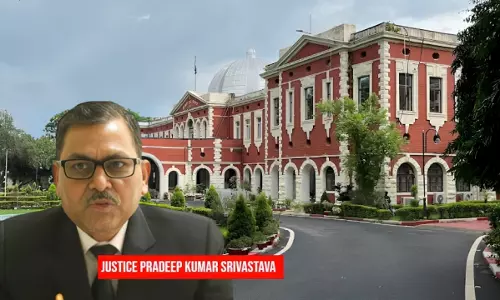
Insistence On Prior Complaint Or Documentary Proof Of Injury To Establish Matrimonial Cruelty “Absurd”: Jharkhand High Court
The Jharkhand High Court has observed that insisting on a prior police complaint regarding assault and torture, or documentary proof of injuries, to establish matrimonial cruelty is “absolutely absurd and unwarranted”.A Single Judge Bench of Justice Pradeep Kumar Srivastava made the observation while setting aside an appellate court's decision acquitting a husband of the offence under Section 498A of the Indian Penal Code. The High Court restored his conviction and sentence imposed by the trial...
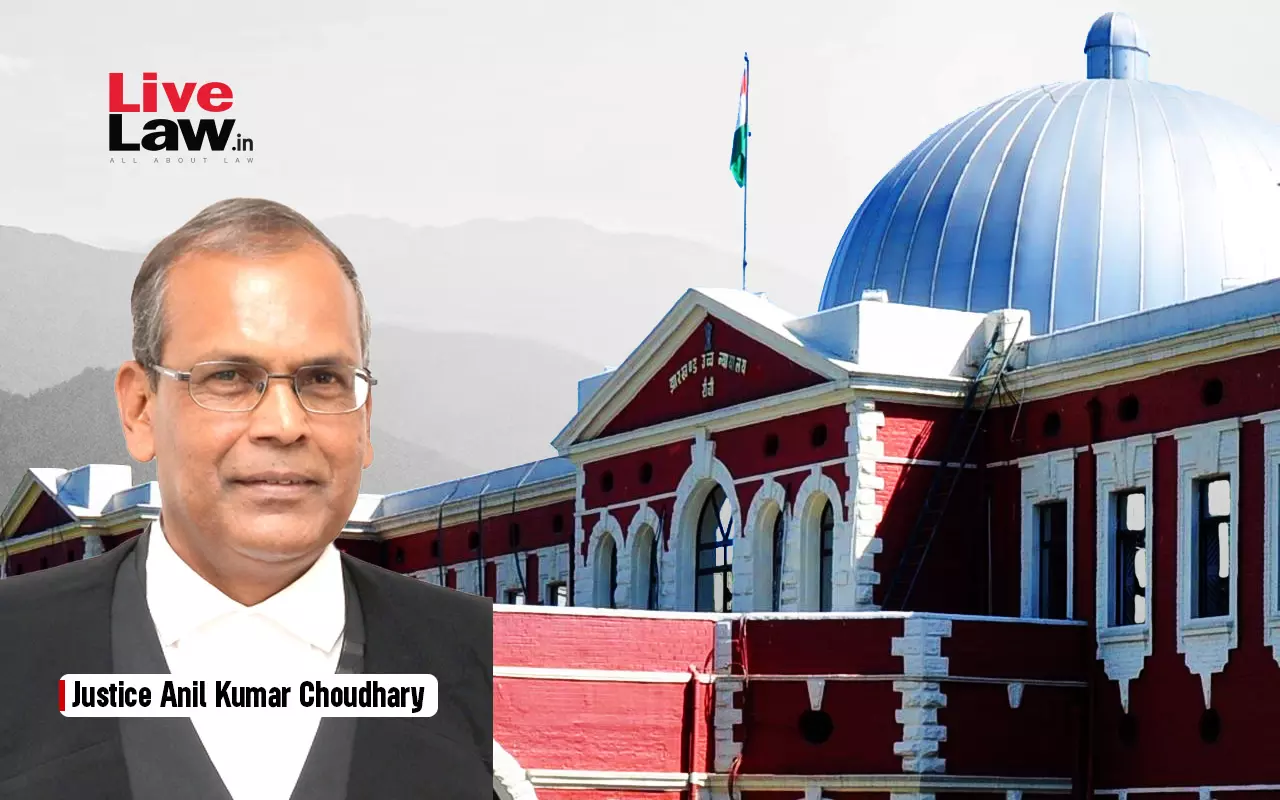
Holding Ambedkar Jayanti Meeting In School Was Not Attempt To Unduly Influence Lok Sabha Polls: Jharkhand High Court Quashes Case
The Jharkhand High Court has held that merely organising a meeting in a school hall to celebrate Ambedkar Jayanti does not amount to undue influence at an election under Section 171F of the IPC.A Single Judge Bench of Justice Anil Kumar Choudhary quashed criminal proceedings against two persons who were booked over a meeting held during the 2024 Lok Sabha elections.The first petitioner was the principal of Saraswati Shishu Vidya Mandir. The allegation was that he organised a meeting in the...
Mere Protesting Or Using Bad Language Does Not Constitute Obstruction Of Public Servant: Himachal Pradesh High Court
The Himachal Pradesh High Court has held that mere protest or use of intemperate language against a public servant, in the absence of any overt act that actually obstructs the discharge of official duties, does not constitute an offence under Section 186 of the Indian Penal Code (IPC). The Court observed that while “obstruction” need not necessarily be physical, the prosecution must establish an act involving force, threat, or an actual effect of preventing the public servant from carrying out...
Witness Attesting Allegedly Fraudulent Document Not Criminally Liable Without Specific Allegations: AP High Court
The Andhra Pradesh High Court held that mere attestation of an allegedly fraudulent document, without any specific allegation attributing an active role to the attesting witnesses in the alleged offence, cannot by itself make them criminally liable. [2026 LiveLaw (AP) 195]The Court accordingly quashed the criminal proceedings against two accused who had been implicated solely on the ground that they had attested a disputed Gift Deed.A Single Judge Bench of Justice Tuhin Kumar...
Mere Assault On Woman Without Specific Overt Act Towards Commission Of Rape, Is Not Attempt To Rape: Jharkhand High Court
The Jharkhand High Court has held that an assault on a woman, in the absence of any specific overt act towards the commission of rape, would not by itself constitute an attempt to rape.A Single Judge Bench of Justice Pradeep Kumar Srivastava altered the conviction of a man from attempt to rape under Sections 376/511 of the Indian Penal Code to the offence of outraging the modesty of a woman...
Common Intention | S.34 IPC Attracted Where Co-Accused's Participation Has 'Functional Relationship' With Offence: Allahabad High Court
The Allahabad High Court has observed that to attract 'common intention' liability under Section 34 IPC, the participation of a co-accused must have a "functional relationship with the offense in question".The bench clarified that the mere fact that several persons participated in the same occurrence does not make each of them liable for every offence committed during it. A Bench of Justice...
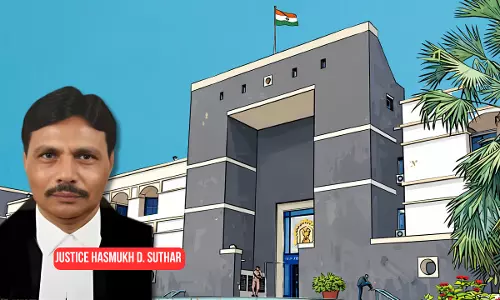
Gujarat High Court Grants Bail To Man Accused Of Objecting To SC/ST Community Member's Invitation To Brahmin Marriage Function
The Gujarat High Court granted regular bail to a man accused of portraying complainant as a "bootlegger" and saying that a member of SC/ST community should not be invited to marriage in the Brahmin community. [2026 LiveLaw (Guj) 223]The court was hearing a man's appeal booked under Sections 3(1)(U) of Scheduled Castes and Scheduled Tribes (Prevention of Atrocities) Act, 1989 whose regular...

Every Medical Error Not Criminal Negligence: Telangana High Court Quashes FIR Against Diagnostic Staff For Issuing False Positive Report
While quashing FIR against four staff members of a diagnostic centre for issuing an allegedly false positive Hepatitis B report to a woman before her hernia surgery, the Telangana High Court said that not criminal law cannot be invoked to punish every instance of professional negligence. [2026 LiveLaw (Tel) 134]In doing so the court held that mere inadvertence, an error of judgment, or a lapse...
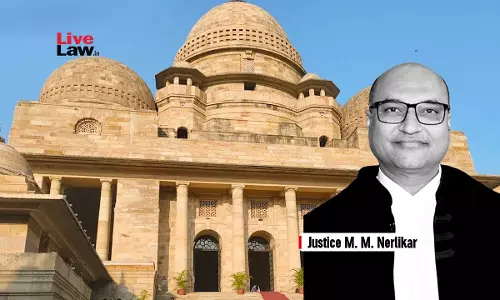
Law Department Must Not Succumb To Pressure From Other Departments: Bombay High Court Rejects Delayed State Appeal
The Department of Law and Judiciary (DLJ) must act independently and not succumb to pressure mounted by any of the other departments of a State Government, held the Bombay High Court while refusing to condone a delay of 650 days in filing appeal against acquittal in a Prevention of Corruption (PC) Act case. Sitting at the Nagpur seat, a single-judge Justice Mahendra Nerlikar also imposed a...
Motor Accident Claim | Acquittal In Criminal Case Per Se Won't Prove Lack Of Negligence : Supreme Court Explains Principles
Acquittals in Criminal Court cannot control or dictate the outcome of MACT proceedings, the Supreme Court has held, reiterating that criminal proceedings and motor accident compensation claims operate in distinct legal spheres and are governed by different standards of proof."A subsequent acquittal in a criminal case does not affect the assessment of tortious liability under the MV Act......