



Civil Law
Hindu Succession Act | Possession Of Property Necessary For Woman To Claim Rights Under Section 14 : Supreme Court
The Supreme Court has reiterated that for a Hindu female to claim rights under Section 14 of the Hindu Succession Act 1956, she has to be in possession of the property.Section 14 states that property of a female Hindu will be her absolute property. "Any property possessed by a female Hindu, whether acquired before or after the commencement of this Act, shall be held by her as...

Hindu Succession Act | Daughters Get Equal Coparcenary Rights As Sons Even If Father Died Before 2005 Amendment : Orissa High Court
The Orissa High Court has reiterated daughters’ entitlement to inherit ancestral property in view of their equal coparcenary rights, as were conferred on them by the Hindu Succession (Amendment) Act, 2005, irrespective of date of death of their fathers.Following the conclusion reached by the Supreme Court in its landmark decision in Vineeta Sharma v. Rakesh Sharma & Ors., the Division...
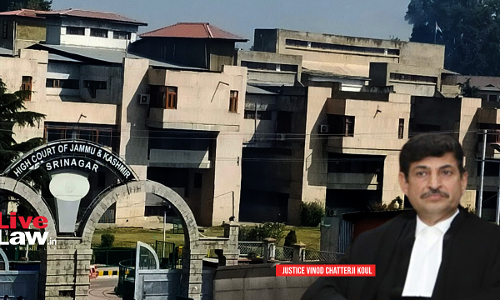
J&K Hindu Succession Act | Will Can Be Executed In Favour Of Unrelated Person: High Court
The Jammu and Kashmir High Court has made it clear that a Will under Section 27 of the Jammu and Kashmir Hindu Succession Act can be executed in favour of a person who is not even related to the executant.A single bench of Justice Vinod Chaterjee Koul said Will is statutorily recognized mode of "alteration of natural line of succession" delineated by Hindu Succession Act without any...
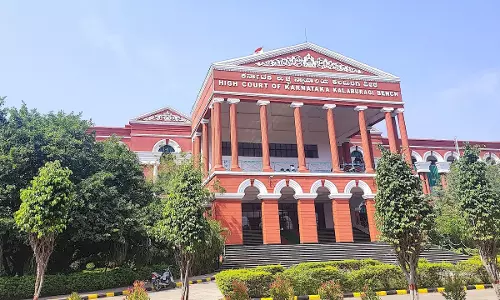
No Scope For Determining Shares Of Parties While Deciding Application For Grant Of Succession Certificate: Karnataka High Court
The Karnataka High Court has said that a court considering application for grant of Succession Certificate has no power to go into the substantial and intricate question of facts and law.A single judge bench of Justice C M Joshi sitting at Kalaburagi bench, dismissed a petition filed by parents of one deceased Nagappa, challenging order of the trial court and appellate court granting...
Electronic Monitoring To Regulate Overspeeding : Supreme Court Calls For Expert Committee Meeting On Implementation Of Section 136A MV Act
The Supreme Court on Friday heard a plea regarding road safety through electronic monitoring. A bench comprising Chief Justice DY Chandrachud, Justice PS Narasimha and Justice JB Pardiwala asked for a meeting to be convened by Justice AM Sapre, chairperson of Supreme Court Committee on Road Safety to set out an agreed formulation of modalities for implementing the provisions of Section 136A...
Motor Vehicles Act : MACT Bar Association Challenges Removal Of No-Fault Liability, Introduction Of Limitation Period Etc; Bombay HC Seeks Centre's Response
A public interest litigation filed before the Bombay High Court has challenged recent amendment in the Motor Vehicles Act, 1988 (1988 Act) which removes the provisions of 'No fault liability', introduces limitation on making claims, and limits third party liability for insurance companies. A division bench led by Chief Justice Dipankar Datta on Thursday granted time to the...
Motor Accident Claim - Dependents Entitled To Compensation For Loss Of Income Even If They Inherited Businesses & Properties Of Deceased : Supreme Court
The Supreme Court has held that motor accident compensation need not be reduced for the sole reason that that the business ventures and properties of the deceased were bequeathed to the claimants.In this case, the Deceased was a businessman in diverse areas and also drew income from his agricultural lands and leased out real estate. At the time of his demise, he left behind a widow, two...
Delivering Used & Defective Car Against Booking For New Car Is Unfair Trade Practice, Dishonest & Unethical : Supreme Court
The Supreme Court has held that delivering a defective and old model car against a booking for a new car made by a customer who has paid full sale consideration is an "unfair trade practice". The Court added that such a practice amounts to "dishonesty on the part of the dealer" and "against morality and ethics".Holding so, the Court affirmed the direction passed by a District Consumer Forum...
Question Of Limitation Pertains To Substantial Justice: Supreme Court Condones 67 Days' Delay In Filing Revision Before NCDRC
Setting aside an NCDRC order by which a revision petition filed after 67 days' delay was dismissed, the Supreme Court has observed that "the question of limitation is not to be examined with a view to decline the condonation, but to do substantial justice".Remarking that "delay in filing the revision was not huge, that should not have been condoned under the Consumer Protection Act", the...
Can Insurer Impleaded As Respondent In Claim Petition Challenge Quantum Of Compensation Without Leave Under Section 170 MV Act? Supreme Court To Consider
The Supreme Court has issued notice on a plea urging that an Insurance Company, if impleaded as a party respondent under the Motor Vehicles Act, can question the quantum of compensation as a person against whom a claim is made. The bench of Justices S. K. Kaul and M. M. Sundresh was hearing the SLP against a March decision of the Bombay High Court at Goa dismissing the appeal filed by...
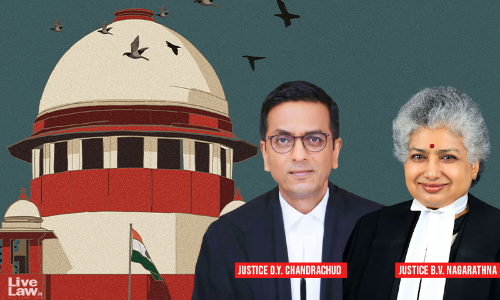
Insurer Should Indemnify If Insured Suffers Sudden Sickness Or Ailment Which Is Not Expressly Excluded Under The Policy: Supreme Court
The Supreme Court has observed that if the insured suffers a sudden sickness or ailment which is not expressly excluded under the policy, a duty is cast on the insurer to indemnify the insured for the expenses incurred thereunder.The bench of Justices DY Chandrachud and BV Nagarathna in the present matter was considering a civil appeal against the order dated 22nd May, 2015, passed by...

Consumer Case Not Maintainable Over Medical Services Given Free Of Charge Just Because Doctor Draws Salary From Hospital : Supreme Court
"The salary that is paid by the hospital administration to the employee medical officer cannot be regarded as payment made on behalf of the person availing of the service or for his benefit so as to make the person availing the service a "consumer" under Section 2(1)(d) in respect of the service rendered to him.”