


Corporate
Supreme Court Takes Suo Motu Case Over NCLT Appointment Delays & Infrastructure Issues
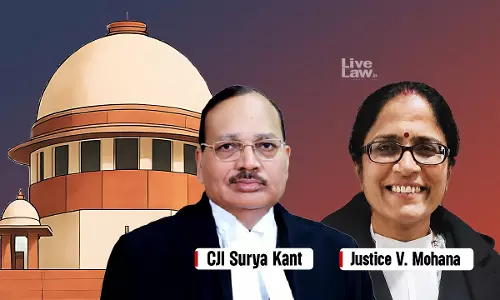
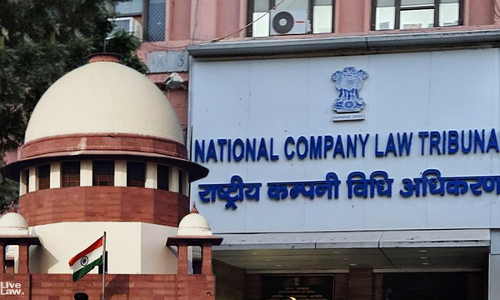
The Supreme Court has registered a suo motu case over the delays in the appointment of members in National Company Law Tribunals and infrastructure issues.The suo motu case, titled "In Re : Appointment of Judicial and Technical Members and Inadequate Infrastructure in National Company Law Tribunal (NCLT) and Ancillary Issues" was registered on May 19, following the April 29 judgment in...
Plaintiff's Reply To Counterclaim In Commercial Suits Subject To Same Time Limit As Written Statement: Supreme Court
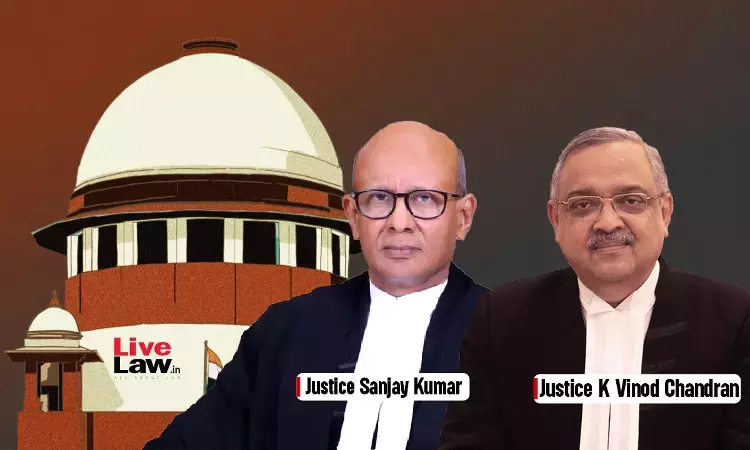
The Supreme Court on Monday held that plaintiffs in commercial suits are also bound by the mandatory 120-day time limit for filing a written statement in response to a defendant's counterclaim, ruling that the stringent timeline under the Commercial Courts Act applies equally to such pleadings to ensure expeditious disposal of commercial disputes.A Bench of Justice Sanjay Kumar and Justice...
Perils Of Judicial Metaphors
Reflections on Value Wise Consultancy and the craft of judgingBy Every judge knows that difficult cases occasionally tempt colourful language. A striking metaphor can illuminate a legal principle, make a judgment memorable and sometimes even explain a complex doctrine more clearly than pages of reasoning. But there is also a danger. A metaphor is a servant of reasoning, not a substitute...

Who Counts As A “Member”?
The Supreme Court Reads Substance into the Oppression RemedyIn a significant reaffirmation of the equitable foundations of company law, the Supreme Court has held that an investor whose name does not appear in the register of members may still maintain a petition alleging oppression and mismanagement, so long as the company's own conduct recognises him as a stakeholder. On 4 May 2026, a Division Bench comprising Justice Pamidighantam Sri Narasimha, who authored the opinion, and Justice Alok...
Commercial Courts Act | Documents Being Voluminous No Excuse For Their Belated Production : Supreme Court
The Supreme Court on Thursday (July 9) held that a mere 'voluminous nature' of the evidence does not constitute a "reasonable cause" for their belated production under the Commercial Courts Act, 2015. “…it is well established that the plaintiff when leading evidence, is expected to not only produce all documents but also properly anticipate the questions that may be put to its witnesses...
IBC| 'Mere Settlement Talks Can't Defer CIRP Admission Once Debt & Default Is Established', Supreme Court Affirms Revival Of CIRP
The Supreme Court on Thursday (July 9) dismissed the appeals filed by the suspended director of Parsvnath Developers Ltd., upholding the revival of Corporate Insolvency Resolution Process proceedings against the real estate group in a default case involving approximately ₹452 crore.A partial court working days bench of Justice KV Viswanathan and Justice Alok Aradhe refused to interfere with...
Supreme Court Upholds Rejection Of Operational Creditor's Insolvency Plea Against Essar Power Gujarat
The Supreme Court on Wednesday (July 8) refused to interfere with the National Company Law Appellate Tribunal (NCLAT) order rejecting an ₹85-crore insolvency petition against Essar Power Gujarat Ltd. on the ground that a pre-existing dispute exists between the parties. A partial court working days bench of Justice Nongmeikapam Kotiswar Singh and Justice K. Vinod Chandran dismissed the...

Zombie Trademarks In Metaverse
Can a dead mark be revived again? Can a trademark ever truly be considered dead? These are the foundational questions that modern intellectual property law must confront as commerce shifts toward digital frontiers. Logically, when the owner of the mark abandons it, it enters the public domain, and anyone should be allowed to use it. However, the commercial reality is far more complex.When a mark is abandoned, it leaves behind a nostalgic consumer experience, has created its own Goodwill in the...
Defective Appeals, Extinguished Rights: Supreme Court's New Limitation Doctrine Under IBC
In a significant reaffirmation of the Insolvency and Bankruptcy Code's commitment to expedition and finality, a Bench of the Supreme Court comprising Justice Dipankar Datta and Justice Satish Chandra Sharma, speaking through Justice Dipankar Datta, held in CA Ramchandra Dallaram Choudhary v. Adani Infrastructure and Developers Private Limited (2026 INSC 629) that a litigant cannot circumvent the strict limitation regime under Section 62 of the IBC by filing a defective appeal and curing defects...