



- Home
- /
- High Courts
- /
- Calcutta High Court
- /
- FCRA License Renewal Cannot Be...
FCRA License Renewal Cannot Be Refused Without Hearing When Central Govt Undertakes Enquiry: Calcutta High Court
Srinjoy Das
24 Aug 2026 3:25 PM IST
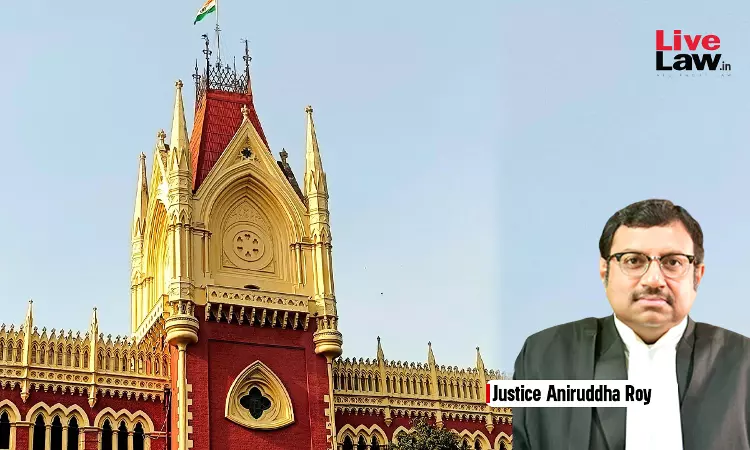
The Calcutta High Court has held that the principles of natural justice are “in built” into the renewal process under Section 16 of the Foreign Contribution (Regulation) Act, 2010 (FCRA), and that an FCRA-registered organisation must be given notice and an opportunity to present its case where the Central Government undertakes an enquiry before refusing renewal. Justice Aniruddha Roy...
This is a premium content
Available exclusively to
Our subscribers
Subscribe Premium 
INR 1099+GST
Your support helps us to bring you more content at
an affordable subscription scheme !!!
All payment options available
The Calcutta High Court has held that the principles of natural justice are “in built” into the renewal process under Section 16 of the Foreign Contribution (Regulation) Act, 2010 (FCRA), and that an FCRA-registered organisation must be given notice and an opportunity to present its case where the Central Government undertakes an enquiry before refusing renewal.
Justice Aniruddha Roy made the observation while setting aside an order dated July 28, 2026, by which the Central Government had refused to renew the FCRA registration of Darjeeling Mary Ward Social Centre.
The Court directed the appropriate authority of the Central Government to reconsider the renewal application after granting the organisation an opportunity of hearing and to pass a reasoned order within six weeks.
The petitioner was a society registered under the West Bengal Societies Registration Act, 1961 and held an FCRA registration granted under Section 12 of the FCRA. Its certificate was issued on August 6, 2021, for a period of five years.
Before expiry of the certificate, the society applied for renewal under Section 16 of the FCRA.
However, by order dated July 28, 2026, the jurisdictional authority refused the renewal application by invoking Section 12(2) of the FCRA.
Appearing for the petitioner, Senior Advocate Deep Chaim Kabir argued that the application was governed by Section 16 and that any refusal of renewal had to be made in accordance with the parameters contained in that provision.
He contended that the authority had failed to record the requisite satisfaction for refusing renewal and had proceeded under a provision which was not applicable to the renewal application.
The petitioner also challenged the observation in the refusal order that the foreign contribution lying unutilised in its FCRA account and assets created out of such contribution would vest with the prescribed authority until the association obtained a fresh certificate.
Additional Solicitor General Dhiraj Trivedi opposed the writ petition, primarily relying upon the alternative remedy available under Section 32 of the FCRA.
On merits, the Centre argued that the relevant materials had been considered and that adequate reasons had been recorded in the refusal order.
It was also argued that Section 16 does not expressly provide for a personal hearing before an application for renewal is refused.
According to the Centre, the Central Government could conduct an enquiry on the basis of material already available before it and, if the material showed that the applicant was disqualified, refuse renewal without first giving the applicant an opportunity to participate in the enquiry.
The ASGI submitted that the petitioner had also been given liberty to apply afresh for renewal.
The High Court rejected this approach. The Court noted that the petitioner admittedly held a valid FCRA certificate and had applied for renewal within the statutory period. It was also not a case involving suspension under Section 13 or cancellation under Section 14.
Examining Section 16, the Court noted that while the Central Government has the power to make such enquiry as it deems fit before renewing an FCRA certificate, that power is linked to the requirement of satisfying itself that the applicant continues to fulfil the conditions under Section 12(4).
Justice Roy observed: “Though the power and discretion is there with the Central Government, but of course subject to restrictions imposed under the Section by using the expressions as it deems fit, to satisfy itself.”
The Court held that this satisfaction must be based on the available material and that the authority must examine the statutory criteria afresh at the stage of renewal, particularly because circumstances may have changed during the five-year period after the original certificate was granted.
The Court then laid down the key natural justice principle:
“The moment a further enquiry is required to be carried out, it is implied that the same should be carried out upon due notice to the applicant and after granting it an opportunity to place its case for the satisfaction of the appropriate authority of the Central Government.”
The Court added: “Otherwise, the applicant might face civil and evil consequences.”
Consequently, Justice Roy held that the requirement of natural justice is “in built” into the renewal provision under Section 16.
“Hence, the provision for compliance of natural justice is in built and has to be and should be read as embodied under this provision.”
The Court further held that the power to refuse renewal under the second proviso to Section 16(3) also requires the Central Government to arrive at a proper satisfaction that the applicant has violated the FCRA or the Rules.
Such satisfaction, the Court said, must be supported by reasons based on the available material.
Justice Roy observed: “Such finding must also be accompanied with reasons on the basis of available materials.”
The Court emphasised that this requirement assumes greater significance because refusal to renew an existing FCRA certificate deprives the organisation of the benefits attached to the registration.
“In the event, the certificate, already granted and is not renewed upon application being made under 2010 Act, the same would amount to taking away of a valuable right of the certificate holder…”
The Court consequently held that the statutory provisions governing FCRA registration and renewal must be construed strictly.
On examining the impugned order, the Court found that the requisite exercise had not been undertaken.
The judgment records: “the satisfaction required to be recorded on the basis of the available materials or on the basis of violation of any provision of the Act or the rules, such exercise is absent in the impugned order, save and except, mentioning of some vague and bald finding…”
The Court further found that the Central Government had refused the renewal application under Section 12(2), despite the application being one for renewal under Section 16.
According to the Court, this demonstrated: “a clear nonapplication of mind by applying a wrong provision of the statute.”
FCRA Renewal Refusal Cannot Automatically Trigger Vesting Of Foreign Contribution
The High Court also rejected the direction contained in the impugned order concerning vesting of unutilised foreign contribution and assets created from such contribution.
The Court noted that such consequences are provided under Section 15 in the context of cancellation under Section 14 or surrender under Section 14A.
They are not consequences prescribed under Section 16 merely because an application for renewal has been refused.
The Court therefore concluded that the impugned order suffered from: “an ex facie jurisdictional error and illegality.”
Alternative Remedy No Bar Where FCRA Order Suffers From Apparent Jurisdictional Error
The Centre had argued that the writ petition should not be entertained because the petitioner had an alternative statutory remedy under Section 32 of the FCRA.
The High Court rejected the objection.
Relying upon the Supreme Court's decision in Godrej Sara Lee Ltd. v. Excise and Taxation Officer-cum-Assessing Authority, as well as its own decision in State Bank of India v. Commercial Central Goods and Service Tax and Central Excise, the Court reiterated that the rule requiring exhaustion of an alternative remedy is a rule of policy, convenience and discretion rather than an absolute rule of law.
The Court found that the jurisdictional error in the FCRA refusal order was apparent on the face of the record and did not require further factual investigation. It therefore held that the writ petition was maintainable.
Fresh FCRA Renewal Decision Ordered Within Six Weeks
The High Court accordingly set aside and quashed the Central Government's July 28, 2026 order refusing renewal. The appropriate Central Government authority was directed to reconsider the renewal application: after granting the petitioner an opportunity of hearing; by passing a reasoned order; strictly in accordance with law; and within six weeks from communication of the judgment.
The Court clarified that it had not expressed any opinion on the merits of the society's application for FCRA renewal.
Case No: W.P.A. 1736 of 2026
Case :Darjeeling Mary Ward Social Centre Vs. The Union of India & Ors.