



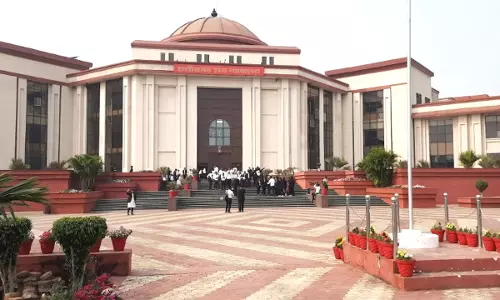
Chhattisgarh High Court
Married Woman Can Claim Compassionate Appointment After Father's Death, No Presumption Of Dependence On Husband: Chhattisgarh High Court
The Chhattisgarh High Court has held that a married daughter cannot be denied consideration for compassionate appointment merely on the presumption that she is dependent upon her husband and not upon her deceased father. The Court observed that dependency is a question of fact to be determined on the evidence in each case and that marital status, by itself, cannot furnish a valid basis to...
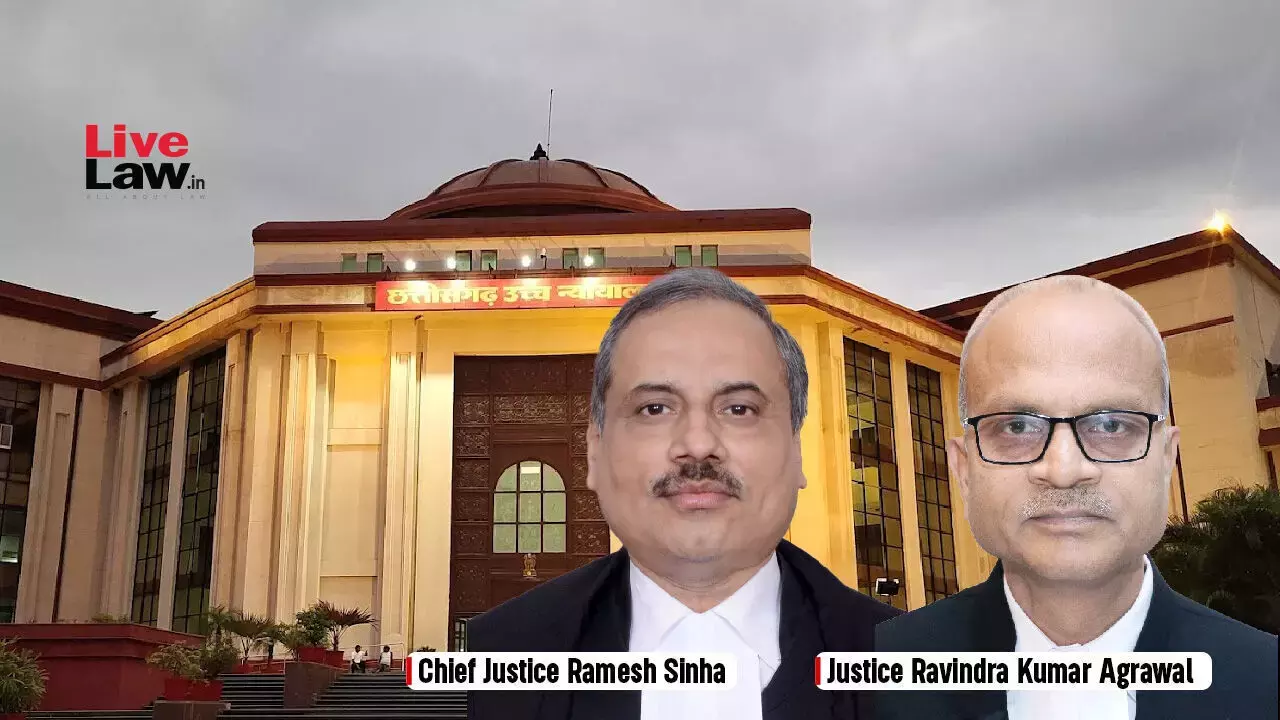
Police Must Strictly Comply With Arnesh Kumar Safeguards; Procedural Lapses Cannot Be Taken Lightly: Chhattisgarh High Court
The Chhattisgarh High Court has held that strict adherence to the safeguards governing arrest and remand, particularly the principles laid down by the Supreme Court in Arnesh Kumar v. State of Bihar, is of paramount importance and that procedural lapses by police officials cannot be treated casually. [2026 LiveLaw (Chh) 81]The Court observed that every police officer is under a...
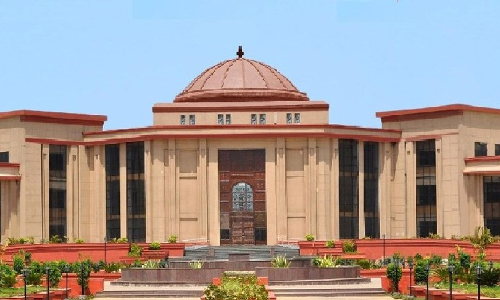
Municipal Corporation Employees Can Only Be Sent To Other Corporations On Deputation, Not By Transfer Order: High Court
The Chhattisgarh High Court has held that under Sections 58(5) and 58(6) of the Chhattisgarh Municipal Corporation Act, 1956, an employee of one Municipal Corporation can be sent to another Corporation only on deputation or while retaining lien, and not through a pure transfer order. The Court observed that where an order neither places the employee on deputation nor protects his lien in...
Absence Of Promotional Avenues Does Not Render Service Rules Unconstitutional; No Right To Promotion: Chhattisgarh High Court
The Chhattisgarh High Court has held that the mere absence of promotional avenues in a service cadre does not render statutory service rules unconstitutional, reiterating that no government servant possesses a fundamental or vested right to promotion. The Court observed that while an employee has a right to be considered for promotion where the applicable service rules provide a...
Employees Can't Be Left In Perpetual Stagnation Due To Lack Of Promotion Policy: Chhattisgarh High Court
The Chhattisgarh High Court has held that the absence of any promotional avenue resulting in perpetual stagnation of a cadre is arbitrary and violative of Articles 14 and 16 of the Constitution. The Court observed that the Chhattisgarh Health and Family Welfare Department Non-Clerical Paramedical and Nursing (Directorate Health Service) Class-III Recruitment Rules, 2013, do not provide...
'Last Heard' Over Phone Can't Be Treated As 'Last Seen Together' Evidence: Chhattisgarh High Court Acquits Murder Convict
The Chhattisgarh High Court has held that the circumstance of a deceased informing a person during a telephonic conversation that he was in the company of the accused constitutes, at best, a case of "last heard" and cannot be equated with the doctrine of "last seen together". The Court observed that the trial court had erroneously treated evidence of "last heard" as proof of "last...
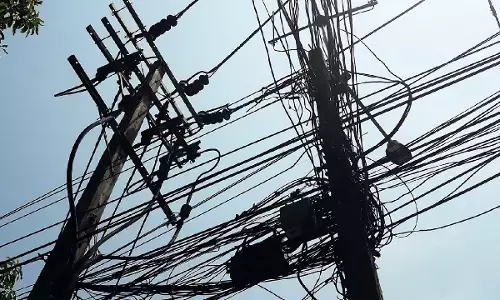
Electrocution Inside Consumer's Home While Using Water Pump Not Covered Under Compensation Scheme: Chhattisgarh High Court
The Chhattisgarh High Court has held that compensation under the Chhattisgarh State Power Distribution Company Limited's Circular is not payable where an electrocution accident occurs within a consumer's domestic premises while operating an internal electrical appliance such as a Tullu Pump. The Court expressed concern over the Electricity Department's failure to communicate the rejection of...
RTI Act | First Appellate Authority Not Deemed Public Information Officer Without Meeting S.5 Requirements: Chhattisgarh High Court
The Chhattisgarh High Court has held that a First Appellate Authority under the Right to Information Act, 2005 cannot be treated as a deemed Public Information Officer and subjected to penalty under Section 20(1) of the Act without satisfaction of the statutory requirements contained in Sections 5(4) and 5(5). The Court observed that the State Information Commission imposed a penalty...

Wife Demanding ₹2 Crores To Consent For Divorce, Refusing Cohabitation Amounts To Mental Cruelty: Chhattisgarh High Court
The Chhattisgarh High Court has upheld a decree of divorce on the ground of mental cruelty, holding that a spouse who persistently refuses to resume cohabitation, deprives the other spouse of matrimonial companionship and consortium, and demands an exorbitant lump-sum amount of ₹2 crores as a condition for consenting to divorce subjects the other spouse to mental cruelty. [2026 LiveLaw...

Chhattisgarh High Court Increases Accident Compensation By ₹37 Lakh, Says Victim's IT Returns Cannot Be Discarded During Calculation
The Chhattisgarh High Court has held that Income Tax Returns, once duly produced and exhibited, constitute relevant documentary evidence for determining the income of a deceased while assessing compensation under the Motor Vehicles Act. The Court held that such returns cannot be discarded merely on the ground that the income disclosed therein is based on estimation. [2026 LiveLaw (Chh)...
Tehsildar Cannot Compel Production Of Documents At Instance Of Private Respondents In Land Dispute: Chhattisgarh High Court
The Chhattisgarh High Court has held that a Tehsildar has no authority under the Chhattisgarh Land Revenue Code to compel a party to produce documents merely on an application filed by a private respondent. The Court observed that, at the most, the Tehsildar may draw an adverse inference against a party for non-production of documents, but cannot compel their production against the party's...

Chhattisgarh High Court Quashes Dismissal Of Teacher On Allegations Of Objectionable Whatsapp Message To Girl Student
The Chhattisgarh High Court has held that an authority cannot dispense with the inquiry contemplated under Article 311(2) of the Constitution by merely recording its satisfaction. The Court held that where recourse is taken to Article 311(2)(b), the authority must record reasons in writing for dispensing with the inquiry, and in the absence of such reasons, the order of dismissal cannot...