




- Home
- /
- High Courts
- /
- Delhi High Court
- /
- Right To Speedy Trial Not An...
Right To Speedy Trial Not An 'Illusory Safeguard', Personal Liberty Can't Be 'Whittled Down' In MCOCA Cases: Delhi High Court
Nupur Thapliyal
21 May 2025 3:15 PM IST
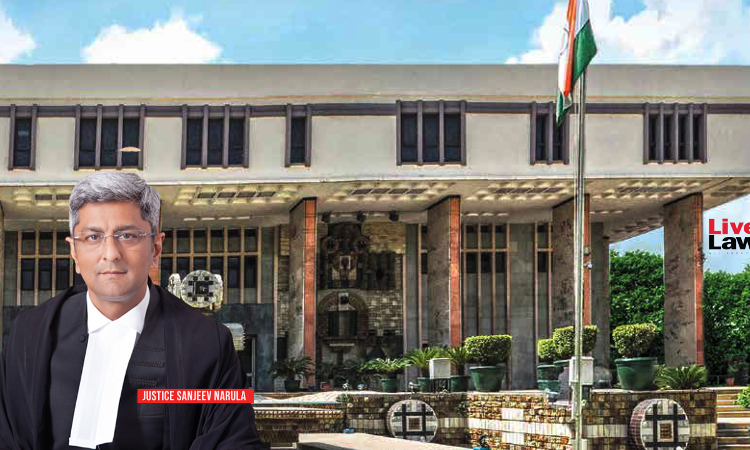
Emphasizing that the right to speedy trial is not an illusory safeguard, the Delhi High Court has said that personal liberty cannot be whittled down merely because the case is under Maharashtra Control of Organised Crime Act, 1999 (MCOCA).“The right to a speedy trial, now firmly entrenched in our constitutional jurisprudence under Article 21 of the Constitution of India, is not an abstract...
This is a premium content
Available exclusively to
Our subscribers
Subscribe Premium 
INR 1099+GST
Your support helps us to bring you more content at
an affordable subscription scheme !!!
All payment options available
Emphasizing that the right to speedy trial is not an illusory safeguard, the Delhi High Court has said that personal liberty cannot be whittled down merely because the case is under Maharashtra Control of Organised Crime Act, 1999 (MCOCA).
“The right to a speedy trial, now firmly entrenched in our constitutional jurisprudence under Article 21 of the Constitution of India, is not an abstract or illusory safeguard. It is a vital facet of the right to personal liberty and cannot be whittled down merely because the case arises under a special statute such as MCOCA,” Justice Sanjeev Narula said.
The Court granted bail to a man registered under Sections 3(1), 3(4) and 3(5) of the Maharashtra Control of Organised Crime Act, 1999.
The accused, Jitender Dixit, was an active gang member of the Manoj Morkheri syndicate. He was accused of playing a direct role in multiple offences, including those involving murder, attempt to murder, kidnapping for ransom, and robbery, across different jurisdictions.
The accused sought bail on the ground of his prolonged period of incarceration, undue delay in the conclusion of trial and the principle of parity with co-accused who had already been granted bail.
He also sought to invoke his right to avail the relief of bail or suspension in sentence already granted to him in other cases.
Granting him bail, Justice Narula said that where enactments stipulate strict conditions for granting bail, it is the unequivocal responsibility of the State to ensure that such trials are prioritized and concluded within a reasonable timeframe.
“Therefore, although Section 21(4) of MCOCA imposes stringent conditions for the grant of bail, these provisions must be balanced with the fundamental right to personal liberty of the accused, the presumption of innocence, and the societal interest in ensuring the right to a speedy trial,” the Court reiterated.
The Court noted that the accused, as on May 07, had already spent 8 years, 11 months, and 24 days in custody and despite the prolonged detention, the trial was far from its conclusion.
“Accordingly, this case falls squarely within the purview of Article 21, which guarantees the right to a speedy trial,” the Court said.
Title: JITENDER DIXIT v. THE STATE (NCT OF DELHI)
Citation: 2025 LiveLaw (Del) 588

Nupur Thapliyal
Nupur Thapliyal is a Principal Correspondent with LiveLaw, based in New Delhi. She reports from the Delhi High Court and trial courts in the national capital