



Disputed Monetary Entitlement Requiring Evidence Can't Be Decided In Writ Proceedings: Gauhati High Court
Bhavya Singh
24 Aug 2026 9:00 AM IST
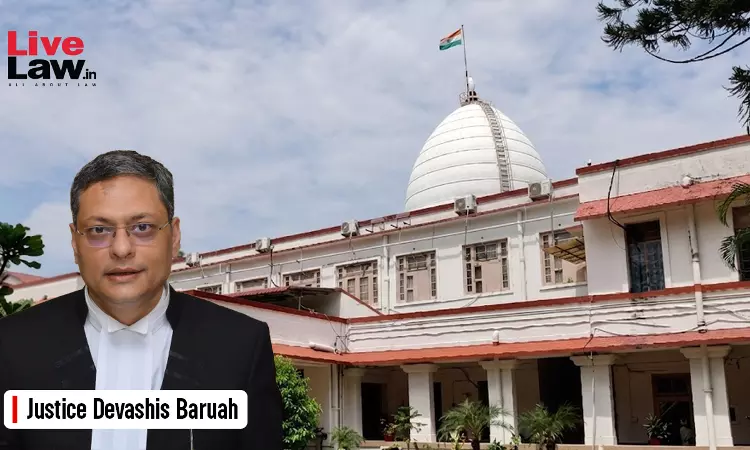
The Gauhati High Court has held that a dispute over monetary entitlement, where evidence is required to be led, cannot be decided by the writ court and has to be adjudicated by a competent civil court.
Justice Devashis Baruah observed, “It is the opinion of the Court that if the Petitioner disputes the amount of its entitlement during the period i.e. from 01.07.2012 to 31.03.2013 and 01.04.2013 to 31.03.2014, this Court cannot decide the same and in that regard, the Petitioner would have to approach the competent Court of Civil Jurisdiction.”
The observation came in a writ petition filed by Bikalanga Kalyan Kendra seeking a direction to the authorities to release Rs.42.29 lakh, which according to it was payable from July 2012 to December 2014.
It had also sought directions for an enquiry regarding two Children Homes and the approval for release of grant under the Integrated Child Protection Scheme.
The petitioner had already received certain amounts for the periods from July 2012 to March 2013 and April 2013 to March 2014. For the period from April to November 2014, the authorities stated that the reimbursement proposal along with the required documents had not been submitted, while assuring that the claim would be considered upon their submission.


The petitioner contended that the payments already made were not in accordance with the prevailing guidelines and that it was entitled to further amounts. It also submitted that under the revised guidelines effective from April 1, 2014, original bill, vouchers and Statement of Expenditure were not required to be submitted, and that the Utilization Certificate for the previous funds had already been provided.
The High Court held that insofar as the petitioner disputed its entitlement for the earlier periods and claimed a further amount, the issue could only be adjudicated before a competent civil court where evidence would have to be led.
The Court stated, “...as the Petitioner disputes its entitlement and claims a further amount, the same can be only adjudicated before a competent Court of Civil Jurisdiction wherein evidence has to be led.”
The Court accordingly declined to direct further payments for the earlier periods and granted liberty to the petitioner to approach the competent civil court.
“Taking into account that the Petitioner has been bonafidely litigating before this Court, it is the opinion of this Court that the period from 22.03.2016 till date be excluded while computing the period of limitation,” the Court directed.
As regards the claim for April to November 2014, the Court took note of the assurance that the claim would be considered if the necessary documents were submitted.
“...appropriate directions can be issued thereby granting the liberty to the Petitioner to submit the necessary documents and thereupon the Respondent Authorities may consider the said claim and if found entitled, release the amount,” the Court stated.
The Court therefore granted liberty to the petitioner to submit the documents required under the guidelines and directed the authorities to consider its entitlement.
If, upon verification, any amount was found payable, the Court directed it to be released within three months from submission of the complete documents.
Further, if the petitioner was found not entitled to any amount or entitled to an amount less than claimed, the authorities were directed to communicate the same within the said period.
The writ petition was accordingly disposed of.
Case No.: WP(C)/2347/2016
Case Title: Bikalanga Kalyan Kendra v. Union of India & 5 Ors.
LL Citation: 2026 LiveLaw (Gau) 141