



- Home
- /
- High Courts
- /
- Telangana High Court
- /
- Wife's Enrolment As Advocate Does...
Wife's Enrolment As Advocate Does Not Prove Sufficiency Of Income To Deny Her Maintenance Claim: Telangana High Court
Ananya Tangri
24 Aug 2026 11:30 AM IST
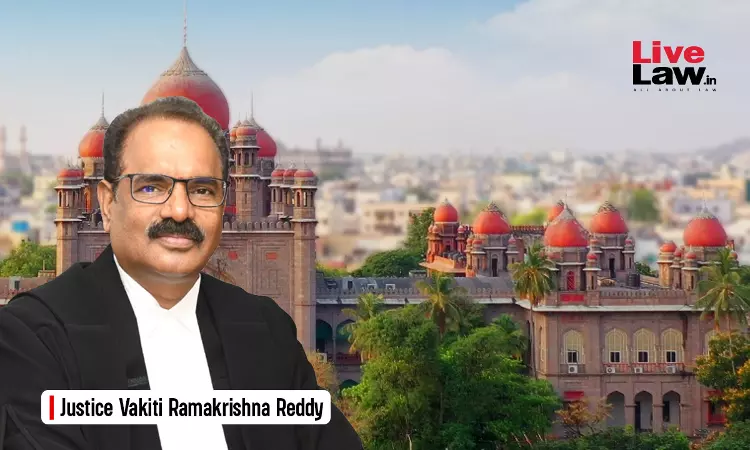
The Telangana High Court has held that merely being enrolled as an advocate and engaged in independent legal practice does not establish that a wife has sufficient independent income to disentitle her from maintenance under Section 24 of the Hindu Marriage Act, 1955. [2026 LiveLaw (Tel) 138]The Court stressed that the statutory test is the sufficiency of income actually available, and...
This is a premium content
Available exclusively to
Our subscribers
Subscribe Premium 
INR 1099+GST
Your support helps us to bring you more content at
an affordable subscription scheme !!!
All payment options available
The Telangana High Court has held that merely being enrolled as an advocate and engaged in independent legal practice does not establish that a wife has sufficient independent income to disentitle her from maintenance under Section 24 of the Hindu Marriage Act, 1955. [2026 LiveLaw (Tel) 138]
The Court stressed that the statutory test is the sufficiency of income actually available, and not educational qualifications, professional standing or earning capacity.
Justice Vakiti Ramakrishna Reddy made the observation while allowing a wife's review application against an earlier High Court order which had set aside the interim maintenance of ₹20,000 per month granted to her by the Family Court.
The Court observed:
“The difference between employment and independent practice is not merely one of name. A person in employment draws a salary which is fixed, regular and capable of proof by a single document. The receipts of an advocate in independent practice are none of these: they are irregular, they vary from year to year, they depend on the briefs that come, and they are subject to the expenses of running a practice. Enrolment at the Bar establishes a qualification and a right to appear. It establishes nothing about income, and still less about income sufficient for the applicant's support under Section 24.”
The dispute arose from matrimonial proceedings pending before the I Additional Family Court, Hyderabad since 2010. In 2013, the Family Court awarded interim maintenance of ₹20,000 per month to the wife and ₹15,000 each to the couple's two daughters. The husband challenged the order before the High Court.
In October 2024, the High Court partly allowed his revision petition. It set aside the maintenance granted to the wife while confirming maintenance for the daughters until they attained majority. The wife subsequently sought review of this order.
The wife argued that she was never in employment and was instead an advocate in independent professional practice. Her professional receipts were neither fixed nor regular, she submitted, and there was no material showing what she actually earned.
Accepting the legal distinction, the Court noted that Section 24 applies where either spouse has no independent income sufficient for their support and necessary litigation expenses.
“The statutory test is therefore the sufficiency of the income actually available, and not the capacity to earn,” the Court said, adding that Section 24 says nothing about “educational qualification, professional standing or earning potential.”
Referring to the Supreme Court's decisions in Chaturbhuj v. Sita Bai, Shailja v. Khobbanna and Manish Jain v. Akanksha Jain, the Court said a spouse's capacity to earn, or even the fact that she earns something, does not by itself disentitle her from maintenance. The question is whether the income actually available is sufficient to maintain herself having regard to the parties' status and the standard of living in the matrimonial home.
The Court found that describing the wife as “earning” was not a factual finding based upon evidence of her income, but an inference drawn from her professional standing.
It clarified that it was not deciding whether the wife actually had sufficient income. Rather, the error was that her professional status had been substituted for the enquiry mandated by Section 24.
The earlier order contained no finding on the income actually received by the wife from her practice, whether such income was sufficient for her support, or the husband's income and means, the Court noted. It had also failed to consider the Supreme Court's binding framework for determining maintenance in Rajnesh v. Neha.
The Court found a separate error in the manner in which the earlier order had interfered with the Family Court's findings.
It observed that the jurisdiction exercised in the civil revision petition was supervisory and revisional, and not appellate. The Family Court had recorded findings regarding the husband's means and the needs of the wife and daughters. However, the earlier High Court order had not found any perversity or jurisdictional error in those findings.
Setting aside the wife's maintenance on a different assessment of her earning capacity therefore amounted to re-appreciation of the material beyond the permissible limits of revisional jurisdiction, the Court held.
The Court further found that restricting the daughters' maintenance to the date they attained majority was introduced without reasons and was contrary to the husband's undertaking, recorded in the earlier order, to pay the entire maintenance awarded by the Family Court. It nevertheless left open the parties' contentions regarding any independent entitlement of the daughters under the Hindu Adoptions and Maintenance Act, 1956.
Accordingly, the High Court allowed the review application, recalled its October 2024 order and dismissed the husband's civil revision petition. It restored the Family Court's 2013 interim maintenance order in its original terms, to operate until disposal of the matrimonial proceedings.
The husband was directed to file a statement of maintenance payable, payments already made and the balance admitted to be due, along with an Affidavit of Disclosure of Assets and Liabilities in the format prescribed in Rajnesh v. Neha. The arrears, once ascertained, were directed to be paid within eight weeks.
Case: X v/s Y
Case Nos.: Contempt Case No.2792 of 2025 & I.A. No.2 of 2024 in C.R.P. No.4263 of 2013
Citation: 2026 LiveLaw (Tel) 138
Appearance: Petitioner appeared party-in-person; K. Durga Prasad appeared for the respondent.
Tags