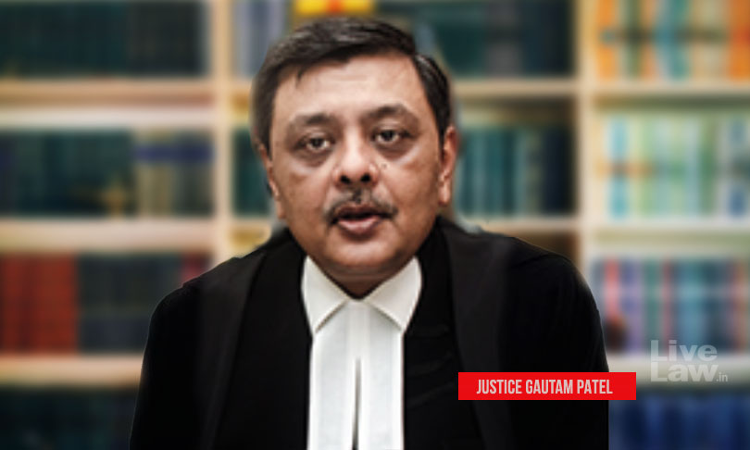
"My list (cause-list) today, Friday, was entirely of writ petition, claims for protection under article 226 invoking some form of some right under part III of the Constitution, arbitrariness or violation of article 19(1) of the freedoms. I quickly looked at the list on the phone and I counted. 47% of the cases total were by commercial entities and not individuals. There were some coming in for pension, some for individual benefits, but a full 47% of the others were in court invoking a constitutional right in the context of a commercial enterprise. That should tell you somewhat of where we are going with this conversation", he added.
Continuing, Justice Patel canvassed, "The other aspect which everybody talks about is pendency. Nobody has defined it. Nobody knows what this beast is and it is the 800 pound gorilla in the room. The minute a case of any description is filed, it is pending. Immediately your meter, your ticker goes up by one but that case is not ready for disposal by the fastest of the fastest of the fastest judges. It can't be done because the judicial process mandates that you have to give a copy of this lawsuit to the other side, serve him and get him to court, give him time to respond to your case. Once he has filed it- fair enough, don't give any adjournments, accepted- but once he has been given enough opportunities, then decide it. How is it pending until then? These numbers lie. Unless you sort out and identify the problem, you're never going to be able to address the solution correctly. You are looking at this huge mountain and you're wondering how you will ever get over it. One of my fellow judges yesterday said that it is an odd thing what will we say about ourselves at the end of our tenure as judges once we retire, that there was an ocean of cases and after 10 or 12 or 15 years maybe, I emptied two buckets out of it. But the ocean is what it is. Glaciers melt faster than we can dispose off cases. Why? How? Many solutions, many problems. But it is crucial to the advancement of the system"
"On the 'bossy State' and on privatisation- how much privatisation and of what would be constitutionally valid? How many of our resources would you accept passing into private hands? Drinking water, breathable air? What are the limits to this privatisation, and there must be some limits and we must define those. On the 'bossy State', the government is now a market player, it wants to be a corporate and it is a jealous and envious market player and one armed ferociously with powers that private corporates do not have. This will be a test of the future, we are going to have to test how much corporate impulse from the government can be accepted as constitutionally good. We are going to have to redefine the boundaries of what a government can legitimately and permissibly do in the name of governance, how far exactly it can go. This is a direct collusion with the other thought of privatisation because the two don't go hand-in-hand. At some time, this is going to be a cataclysmic explosion and it is going to happen in the law courts with very, very far-reaching consequences", he discussed.
"Last point, what is it that judges should be doing in courts? Should we just give you a judgment and leave it to you to figure out what you want to do with it or should we issue directions, and continue issuing directions, demanding compliance? Are we crossing lines, crossing boundaries, going over into the other side of the organs of the government? I don't know. Society has to decide this for us and they have to tell us that if you, as judges, are going to function then you only deliver judgments on what the law says and how things stand, and what to do with your judgment, we will decide not to you. That will also shape the future", continued Justice Patel.