




- Home
- /
- Top Stories
- /
- Justice Abdul Nazeer Agreeing To...
Justice Abdul Nazeer Agreeing To Unanimous Verdict In Ayodhya Case Shows His 'Nation First' Attitude : SCBA President
Awstika Das
4 Jan 2023 6:51 PM IST
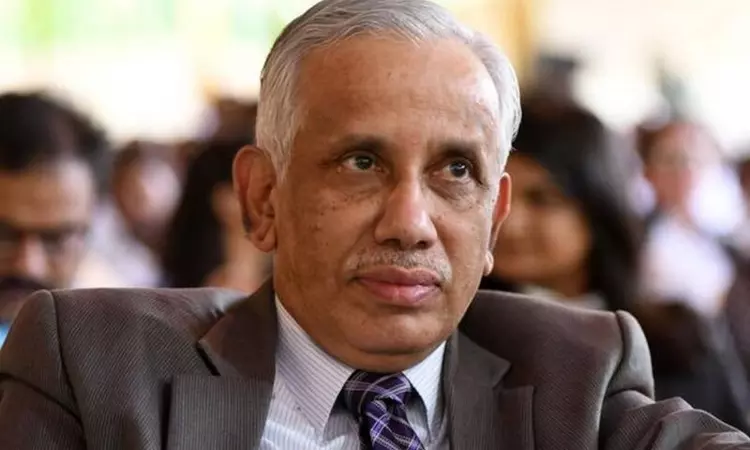
When Justice S. Abdul Nazeer, as the only Muslim judge on the Constitution Bench deciding the controversial Ayodhya land dispute and in the Supreme Court itself, agreed to pronounce a unanimous verdict, not only did he defy expectations, but he also demonstrated his commitment to secularism and his willingness to serve the judicial institution as a ‘true Indian’, Senior Advocate and...
This is a premium content
Available exclusively to
Our subscribers
Subscribe Premium 
INR 1099+GST
Your support helps us to bring you more content at
an affordable subscription scheme !!!
All payment options available
When Justice S. Abdul Nazeer, as the only Muslim judge on the Constitution Bench deciding the controversial Ayodhya land dispute and in the Supreme Court itself, agreed to pronounce a unanimous verdict, not only did he defy expectations, but he also demonstrated his commitment to secularism and his willingness to serve the judicial institution as a ‘true Indian’, Senior Advocate and the president of the Supreme Court Bar Association, Vikas Singh said on Wednesday. Singh was speaking at the farewell function organised in honour of Justice Nazeer, who is set to demit office today.
“The big moment for Justice Nazeer came, in my view, when he was hearing the Ayodhya matter,” the bar association president recalled, “He was the only minority judge in the Supreme Court, and as such, he had to be part of that bench.” There was an expectation that Justice Nazeer would author a separate judgement, “concurring, or not”, Singh said. “But he is a true embodiment of secularism in this country. He not only agreed to give a unanimous verdict without naming who wrote that judgement, but he also agreed with the view of the majority.”
The Ayodhya judgement, Singh further said, demonstrated Justice Nazeer’s ‘true nature’ characterised by an inclination to put “the nation, first; himself, as a judge, second; and himself, as an individual, last” in the order of priority. “This is what is expected of a judge when they take the oath. They must prioritise the nation first. As an Indian, they are required to look at the large country, that is India, and serve the institution as a true Indian.”
In November 2019, a five-judge Constitution Bench of which Justice Nazeer was a part, delivered the judgement in the Babri Masjid-Ram Janmabhoomi case, by which, the title over the disputed land in Ayodhya was unanimously granted to the deity Shri Ram Virajman, allowing the construction of a separate temple where the Babri Masjid once stood. The Sunni Waqf Board, on the other hand, was allocated five acres of land in a separate site to build a mosque.

Awstika Das
Awstika Das, an alumna of the Faculty of Law at the University of Delhi, and the Department of International Relations at Jadavpur University, is a Delhi-based lawyer and a multimedia journalist. She works as a special correspondent covering the Indian Supreme Court. She also hosts a weekly legal news round-up segment on YouTube.