




- Home
- /
- Top Stories
- /
- Encounter Killings- National And...
Encounter Killings- National And State Human Right Commissions Are Doing Nothing, What Are The Use Of These Bodies, Abolish Them: Justice Lokur
Mehal Jain
1 Nov 2021 11:56 AM IST
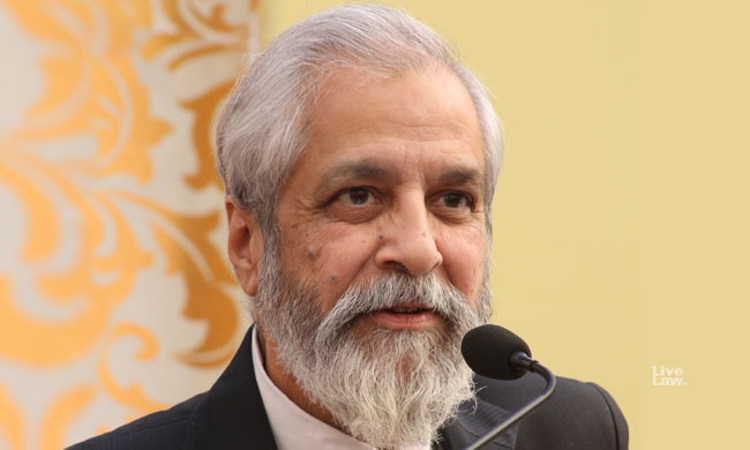
"The Judiciary has been a bit of a disappointment. From what we read in the newspapers, the Manipur extra-judicial killings matter was mentioned thrice before the Supreme Court but not taken up", Justice Madan B. Lokur has expressed.He was speaking on 'Encounter' Killings In India' at the Release of 'Extinguishing Law In Life: Police Killings And Cover-Up In The State Of UP' (a report by...
This is a premium content
Available exclusively to
Our subscribers
Subscribe Premium 
INR 1099+GST
Your support helps us to bring you more content at
an affordable subscription scheme !!!
All payment options available
"The Judiciary has been a bit of a disappointment. From what we read in the newspapers, the Manipur extra-judicial killings matter was mentioned thrice before the Supreme Court but not taken up", Justice Madan B. Lokur has expressed.
In 2017, the Supreme Court bench headed by Justice Lokur had directed the CBI to constitute an SIT to investigate the alleged extra judicial killings in Manipur, on a plea alleging 1528 extra-judicial executions carried out by the police and security forces in Manipur. It is alleged that a majority of them have been carried out in cold blood while the victims were in custody and allegedly after torturing them. Petitioners alleged that not a single FIR has been registered by the Manipur police against the police or the security forces even though several complaints have been made in respect of the alleged extra-judicial executions. As a result of the failure of the Manipur police to register an FIR not a single investigation or prosecution has commenced and the cries of anguish of the families of the victims have fallen on deaf ears. The petitioners alleged that the victims of the extra-judicial executions include innocent persons with no criminal record whatsoever but they are later on conveniently labeled as militants.
About this, Justice Lokur remarked, "The Supreme Court directed the CBI to look into the matter. What has happened, nobody knows. The lawyer, that is what the newspapers say, mentioned the matter three times before the Supreme Court, urging, 'Please take up the case so that we know what the CBI is doing'. But the case has not been taken up. It has been almost 3 years. Nothing has happened. What has happened to the family? Can you say will give you three lakhs or five lakhs, forget about who killed whom and be happy? So long as you have legal impunity- the Armed Forces (Special Powers) Act, you can do whatever you want? It can't be like that. There has to be accountability. The rule of law does not allow encounter killings!"
"In Manipur, people said we are willing to come forward and give evidence, but who is going to take evidence? Nobody. Why? Because the state says 'we are not interested'. I don't know what the CBI are doing. And in the few cases where the enquiries were held, and if they were found guilty, then that is it? What happens after that? The trial will take its own time. And people will get away with it, they will get transferred. How will you get to them?", he continued
"I would say that the judiciary has been a bit of a disappointment. In Manipur, I said I don't know what is going on inspite of the orders passed by the Supreme Court...", he stated.
'NHRC is doing nothing. Might as well abolish it'
"The NHRC is doing nothing. Absolutely nothing. Three years, they have been sitting on it. SHRCs, nobody even talks about them. What is the use of having bodies like this if nothing is happening? Abolish them! You abolish tribunals, might as well abolish the NHRC and SHRC if they are going to do nothing. Why should the taxpayer pay for them?", expressed Justice Lokur.
"Police accountability commissions ordered way back by the Supreme Court in the Prakash Singh judgment are not functional at all, perhaps not even existing in many states. The civil society is unable to do anything because of what is going on!", he continued.
'Killing is virtually the start of the problems; What about justice for the deceased and his family?'
He spoke of how difficult it is for the family of the deceased to get justice, even stating that it is virtually like the killing is the start of the problems.
"First of all, why should this happen at all? And if it does, then how do we give justice to these people? Money, according to me, is not the answer. What about accountability? Is the police accountable? We have had 1500 killings in Manipur, and nobody, to the best of my knowledge, has been convicted. The family is just supposed to go through life knowing that somebody has been killed? A committee chaired by Justice Hegde was set-up and the Supreme Court had requested him to look into eight instances. He found that in one, the police or the paramilitary forces may have been justified, but the defence was standard- 'self defence'. Moreover, in the 7 cases out of 8, Justice Hegde found absolutely no justification for the action that was taken! One of those cases was of a boy who was 12 years of age. And according to the paramilitary forces, he was an insurgent trying to run away, so they shot him. Can you imagine this under the IPC? First of all, you have to figure out whether the child even knows what he is doing and then only you can proceed against him! But here, he was declared as an insurgent and shot dead! No investigation took place!", continued the former judge.
Justice Lokur was of the ardent view that it is absolutely important to have a law on accountability- "Otherwise, you have this culture of impunity. That is what the Armed Forces (Special Powers) Act was trying to do. Then you had the Naga People's Movement and the Manipur cases where it was said that you don't have impunity, you can't just pick up a person and do whatever you want".
Justice Lokur narrated an anecdote of how innocent persons come to be implicated by the State- "I will share one experience that I had in Manipur- I was told there was a particular person who has done wonderful sculptures that he makes from the roots of trees and that I should go and visit his studio. I requested the registrar to talk to him and see if it is convenient for him. The registrar said I don't think he will allow you to come, because he has a hang-up with the state. He does not want anybody from the state to enter his studio. I asked the registrar to please tell him that I don't represent the state in that sense, I represent the judiciary. The registrar spoke to him and he allowed me to come. I asked the registrar why he has the hang-up against the state. I was told that one morning at about 3 o'clock or 4 o'clock, 2 insurgents came to this person's house and they were armed and they said the police are behind us, give us a hiding place for a couple of hours. He had no option but to put them in some safe place in the house. The police came, they looked around and could not find them and left. Later on, they realised that the insurgents were in this person's house and he was arrested under the national security act for harbouring insurgents. And he was in jail for nine months before he was released. So you have these kinds of things happening to perfectly innocent people".
Justice Lokur underlined the significance of witness protection, not only for encounter killings but also for regular crimes which are committed- "Witnesses have been attacked, witnesses have been killed, there have been cases of lawyers being beaten up, lawyers being threatened. What is going on? And this is maybe in a murder case or a rape case. But in a police encounter, the accused is the police. So if an ordinary citizen can traumatise a witness or kill a witness or injure a witness or injure the lawyer, the police machinery is much stronger. Then witnesses turn hostile and we say 'we cannot compel them to not turn hostile'. But why did they turn hostile in the first place?"
'Such reports important to understand template of killings'
"We have had encounter killings, fake encounters in Chhattisgarh, Punjab, Andhra, Maharashtra etc; it is not only confined to UP. But today we are having a similar scenario in Assam. Then there is Kashmir- it is difficult to even find out what is going on, you can make an effort to reach somewhere. Like you have been able to do for UP, if similar studies are done for Assam, it will give you a comparative analysis as to how these things are done. We have a template in UP- that a person who was trying to escape, he tried to snatch a gun and he was shot. It is the same standard template all across the 17 cases which you have studied in the report. Is it the same template which is being used in Assam or is it different? What exactly is the police doing, how are they doing it, how can we prevent all this from happening. We get an idea of what is happening, what lessons we have learnt for the future, where our justice system is failing", explained Justice Lokur.
Tags