
- Home
- /
- Top Stories
- /
- Supreme Court Directs Increase Of...
Supreme Court Directs Increase Of Third Party Insurance Of Cars To 4 & Two-Wheelers To 6 Years
Gursimran Kaur Bakshi
4 Aug 2026 5:01 PM IST
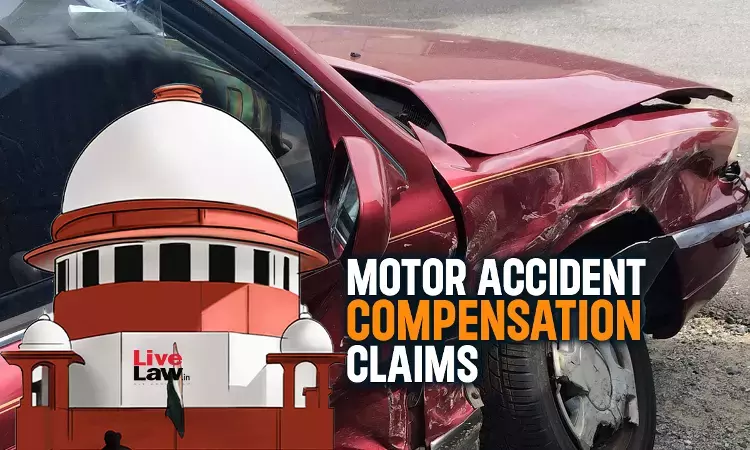
In a significant development, the Supreme Court has directed to increase the term of third-party motor vehicle insurance for new cars to four year and for new two-wheelers for six years.Presently, it is 3 years for cars and 5 years for two years, following the Supreme Court's 2018 direction. Today, the Court noted that despite this direction issued eight years ago, several vehicles...
This is a premium content
Available exclusively to
Our subscribers
Subscribe Premium 
INR 1099+GST
Your support helps us to bring you more content at
an affordable subscription scheme !!!
All payment options available
In a significant development, the Supreme Court has directed to increase the term of third-party motor vehicle insurance for new cars to four year and for new two-wheelers for six years.
Presently, it is 3 years for cars and 5 years for two years, following the Supreme Court's 2018 direction. Today, the Court noted that despite this direction issued eight years ago, several vehicles remain uninsured. Therefore, the Court directed the increase of the term for new policies, despite the objection by the Insurance Regulatory and Development Authority of India and the General Insurance Council.
A bench comprising Justice Sanjay Karol and Justice Augustine George Masih ordered :
"We notice that despite eight years having passed from the said direction, a large number of vehicles remain uninsured. While the IRDA and GIC have recommended that this period not be enhanced, we are of the view that it is in the interest of road safety that the period be enhanced by one year.
Therefore, it is directed that henceforth, third-party insurance for four years for new cars and six years for new two wheelers be required to be purchased. IRDA to immediately issue necessary directions."
The Court issued a series of other directions to ensure compliance with the mandatory insurance regime.
The Court directed that Automatic Number Plate Recognition (ANPR) cameras deployed on highways and roads be integrated with the Insurance Information Bureau database and the VAHAN portal.
The Court also suggested linking fuel supply at petrol pumps to valid insurance status through technological integration, so that uninsured vehicles may be denied fuel until insurance is renewed.
This integration would enable automatic generation of e-challans for uninsured vehicles in addition to detecting existing traffic violations such as speeding and red-light jumping.
The Court further directed that State Police personnel be equipped with handheld devices or downloadable applications linked to insurance databases and the VAHAN portal to verify insurance status in real time and issue challans on the spo
The Court issued these directions while deciding an appeal filed by National Insurance Company Ltd. concerning a motor accident compensation dispute. While dismissing the insurer's appeal, the Court expanded the scope of the proceedings to address systemic issues relating to motor insurance coverage across the country.
The Court noted that two larger questions had arisen during the proceedings: the widespread non-compliance with Section 146 of the Motor Vehicles Act, which mandates third-party insurance for all vehicles, and the need for a uniform motor insurance policy structure covering vehicle occupants in addition to third-party risks.
56% Vehicles On Indian Roads Uninsured
Expressing concern over the scale of non-compliance, the Court observed that nearly 56% of vehicles plying on Indian roads remain uninsured, citing the Parliamentary Standing Committee's report. It noted that approximately 16.54 crore vehicles out of 30.48 crore vehicles do not possess valid insurance.
The Bench observed that victims of road accidents are often compelled to "run from pillar to post" for compensation, particularly where the offending vehicle has no insurance cover.
"The object behind mandatory insurance under Section 146 of the MVA is not just that victims of road accidents are compensated, it is also that they are not drawn into prolonged litigation," the Court observed.
The Court also referred to official data showing over 4.87 lakh road accidents in 2024, emphasising that the issue of uninsured vehicles aggravates the hardship faced by accident victims and their families.
Appearances: N. Venkataraman, Additional Solicitor General; Archana Pathak Dave, Additional Solicitor General; Mr. Joy Basu, Senior Counsel; Meenakshi Midha
Headnote
Motor Vehicles Act, 1988 — Section 146, 147, 149, 196, 207 & Insurance Regulatory and Development Authority Act, 1999 — Section 14 — Non-compliance of Section 146 MVA — Uninsured Vehicles — Technology Integration & Structural Framework Directions - Noting that nearly 56% of vehicles plying on Indian roads remain uninsured, creating severe impediments to motor accident victims receiving timely compensation, the Supreme Court issued wide-ranging directions under public interest: i. ANPR Integration for e-Challans - Automatic Number Plate Recognition (ANPR) cameras on highways and roads must be integrated with data from the Insurance Information Bureau (IIB) and VAHAN portal to issue automatic e-challans to uninsured vehicles; ii. Handheld Devices for Traffic Police - State Police forces are to be equipped with handheld digital devices or apps linked to IIB and VAHAN portals for real-time verification of insurance status on the ground; iii. Four-Layer Structure for Private Vehicle Policies - IRDA to implement a standardized four-tier insurance policy structure for private vehicles (1. Mandatory Third-Party Only; 2. Optional Occupant/Pillion Cover; 3. Personal Accident Cover for Owner/Driver/Occupants; 4. Own Damage Cover) accompanied by a mandatory 'Customer Option Form' and 'Customer Information Sheet'; iv. Enhancement of Mandatory Multi-Year Cover Duration - Extending its earlier mandate in S. Rajaseekaran v. Union of India, the Court enhanced the mandatory third-party insurance period at the time of purchase/registration of new vehicles from 3 years to 4 years for new cars and from 5 years to 6 years for new two-wheelers; v. Pilot Projects — Fuel Denial & Toll Automation - IRDA and MoRTH to evolve a pilot project linking fuel supply at petrol pumps to valid insurance status (denying fuel to uninsured vehicles via ANPR cameras) - MoRTH to also implement toll plaza automation through automatic detection to eliminate congestion. [Paras 23-30]
Motor Vehicles Act, 1988 — Section 159 (formerly Section 158(6)) & Section 166 — Motor Accident Claims Procedure — Pending Pre-2022 Cases - To resolve long pending Motor Accident Claims Tribunal (MACT) cases relating to accidents occurring prior to 31.03.2022, the Supreme Court directed the State Police to promptly file Detailed Accident Reports (DAR) along with relevant documents (FIR, MLC, post-mortem report, insurance policy, permit) before the concerned MACT, and assist in prompt service/production of witnesses for speedy disposal - Courts must not adopt a hyper-technical approach in motor accident compensation claims - Pursuant to the IRDA Circular dated 16.11.2009, insurance companies under a comprehensive/package policy are liable to compensate for any occupant/passenger travelling in the vehicle - Held, High Court rightly awarded compensation to the legal representatives of the deceased owner/occupant travelling as a passenger under a comprehensive insurance policy. [Relied on S. Rajaseekaran v. Union of India, (2018) 8 SCC 447; General Insurance Council v. State of Andhra Pradesh, (2007) 12 SCC 354; Shishu Pal @ Shish Ram & Ors v. Surjeet & Ors, 2026 INSC 63; In Re: Phalodi Accident v. National Highways Authority of India and Ors., 2026 SCC OnLine SC 646; Abhijeet Kumar Pandey v. State of Bihar, 2023 SCC OnLine Pat 279; Paras 31-34]
Case : National Insurance Co Ltd v Smt Thungala Dhana Laxmi
Citation : 2026 LiveLaw (SC) 759
Click here to read the judgment
Tags
Gursimran Kaur Bakshi
Gursimran is the Principal Correspondent with LiveLaw for the Supreme Court. She can be reached out at: simrankaurbakshi@livelaw-in.nujs.remotlog.com